
Quality care: What it is and why it matters
How Permanente Medicine’s physician-led approach achieves medical excellence


Quality care is health care that is safe, effective, patient-centered, timely, efficient, and equitable, according to the Agency for Healthcare Research and Quality.
The World Health Organization also includes the concept of integration — meaning care and services that are coordinated across providers throughout prevention, treatment, and maintenance — as a critical characteristic of quality care.
The ability of physician groups and health care systems to deliver on these elements goes a long way in determining the likelihood of positive outcomes and satisfactory care experiences for patients.
A barrier to quality care: fee for service
Unfortunately, health care in the United States often operates in a way that hampers clinical excellence and removes incentives to deliver high-quality care.
To start, there is a general lack of integration in health care services. Physicians, specialists, and hospitals are typically disconnected from each other and don’t routinely exchange patient health information and data. This leads to gaps in care, including missed health screenings, preventable medical errors, unnecessary or duplicative tests and services, and higher costs.
Care gaps also make preventing, discovering, treating, and managing complex health conditions — such as diabetes, heart disease, and cancer — more difficult. Beyond the medical office, these gaps can occur among marginalized and underserved communities, in part due to a shrinking physician pool in the U.S.
The U.S. lags behind peer countries across a variety of quality of care, health outcomes, patient safety, and access measures
— The Peterson Center on Healthcare and Kaiser Family Foundation
The traditional payment model in the United States — known as fee for service — further exacerbates lower-quality care, especially in settings outside traditional care facilities and services. In the fee-for-service model, health insurers pay clinicians and health providers for each service provided. This creates an incentive that encourages them to perform as many tests and services as possible.
In contrast with fee for service, the value-based care model measures and pays providers against a budget for the care of a population. This model encourages prioritizing care that provides quality outcomes and allows for care to be delivered in lower-cost settings, including the home. In this model, effectiveness of care, cost efficiency, safety, and the overall health of patients are the success metrics. Since the 2000s, value-based care has been an industry goal because it strives to improve overall quality of care.
An example of quality health care: Permanente Medicine
Kaiser Permanente’s physician-led care is one of the nation’s original value-based care models, and is consistently recognized for its high quality, cost efficiency, and superior outcomes.
It starts with the way we structure the care model: 8 Permanente Medical Groups, based in regions throughout the country, work together with Kaiser Foundation Health Plans to provide health coverage and care.
When health care, health insurance, and medical facilities work together, the financial incentives that encourage higher volumes of testing and treatments are replaced with incentives for quality and outcomes. Permanente physicians can focus on prevention, evidence-based care, and clinical excellence instead of providing discrete services driven by economic need.
A patient-centered approach
In this integrated system, Permanente physicians are ultimately free to practice medicine that’s ethical, compassionate, and patient-centered.
Connected by an integrated electronic health record system that is among the largest and most advanced in the country, physicians and care teams have access to patient health information across specialties and locations, making it easier to coordinate care. And with real-time access to patient health information — including screenings, lab and test results, prescriptions, allergies, and prior physician notes — doctors and other clinicians can deliver the right care in the right setting at the right time. This unique approach to care is what we call Permanente Medicine, with quality and medical excellence as the north star.
This interdependent model provides further opportunities for quality improvement. For example, Kaiser Permanente has developed processes in which pharmacy departments work closely with teams of prescribing physicians to establish a formulary that is based on the latest evidence (individual Permanente physicians retain the ability to make exceptions when appropriate).
Similarly, Permanente physicians and other Kaiser Permanente professionals identify medical products — such as devices, durable equipment, and implants — that produce desired care outcomes. This approach aligns thousands of physicians, who use the same equipment and develop shared expertise, which further allows for cost-efficiency that gives Kaiser Permanente the ability to negotiate for lower pricing.
How coordination improves quality
Providing access to patient health records and information to multidisciplinary teams of physicians and clinicians helps ensure continuity of treatment. This helps eliminate missed or overdue screenings and avoids duplicate testing, which leads to a better, more efficient care experience that also helps control overall costs.
In our integrated model, we coordinate care every step of the way. For example, our patient-centered approach to cancer care focuses on prevention, screening, treatment, and research to drive continuous improvement. Understanding a patient’s age, family history, and other risk factors lets us personalize cancer screening schedules to improve early detection. We continually identify lifestyle changes that impact cancer development in a variety of ways, including nutrition and weight-loss programs, as well as tobacco cessation.
Genetic testing connects patients and their family members with genetic counselors and physicians for careful monitoring. Patients have access to innovative treatments such as immunotherapy and clinical trials, when appropriate. And with our virtual Cancer Expert Review Program, Permanente oncologists can quickly connect with cancer subspecialists across the organization to access expert care and innovative treatment options. All of this happens within the same care ecosystem instead of across disparate and disconnected specialists and locations.

Proof of industry-leading outcomes
A high-level examination of the numbers highlights the success of the Permanente Medicine approach to quality care.
For example, in a large Kaiser Permanente study published in the American Journal of Managed Care in 2021, patients in Southern California had better survival rates for 8 common cancers over a 5-year period than patients who were cared for in other private settings. The survival rates were even higher for Black and Hispanic patients — just one example of how coordinated care can help address racial and ethnic health disparities.
An internal study published in 2022 found that, in the communities we serve, Kaiser Permanente members were 20% less likely to experience premature death due to cancer compared to others in the community.
Our collective clinical efforts have earned consistently high marks from the NCQA Quality Compass® HEDIS ratings for quality measures, including cervical, breast, and colorectal screenings; vaccinations; pre- and post-natal care; as well as controlling asthma, high blood pressure, and diabetes.
Quality and safety enhanced by health information technology
Health information technology strengthens care quality and safety by making it easier for physicians and care teams to share clinical information quickly and accurately. Advanced electronic health records ensure that patient information is updated in real time and accessible to both clinicians and patients. This improves care coordination, helps identify potential gaps or errors, and supports the sharing of best practices.
Permanente physicians practice medicine in a connected, transparent environment where every care encounter — whether in person or virtual — is documented in the patient’s electronic health record. As a result, care teams always have a complete, up-to-date view of each patient’s health, enabling around-the-clock, well-informed care.

For example, built-in safety and screening alerts notify clinicians about potentially dangerous medication interactions, allergies, and upcoming or overdue health checkups. The alerts prompt staff to schedule screenings and appointments immediately, increasing prevention and early detection. Physicians can draw up prescriptions via patients’ electronic health records because our formulary and pharmacies have direct access to them.
We bring in technologies that actually help us with…the quintuple aim of being able to provide high-quality care that is affordable. These technologies also help ensure that safety, patient perception, and the service experience [are] good for all involved.
– Ramin Davidoff, MD, co-CEO, The Permanente Federation
Permanente physicians make use of other innovative technology tools to drive quality. When they’re not in the same physical location, doctors can consult with each other by phone, video, and secure text messaging. This is especially valuable when, for example, a primary care physician needs to quickly consult with a specialist — who also has real-time access to the patient’s record — for additional expertise.
Quality care driven by evidence-based research and best practices
Another hallmark of quality care is the use of evidence-based clinical practice guidelines and best practices to drive care decisions. Clinical practice guidelines are a collection of care recommendations for specific conditions, and may include detection, diagnosis, and treatment. Permanente physicians and other clinical experts rigorously review and synthesize available medical evidence, turning it into expert panel recommendations that inform and guide clinical decision-making.
Permanente Medical Groups develop guidelines under the National Guidelines Program. Physicians and other experts routinely review guidelines every 2 years — and sooner if new evidence emerges.

Each year, the program convenes guideline directors from across Kaiser Permanente to evaluate and select priority topics to include in recommendations. Selection criteria include but are not limited to:
- Unwarranted variation in clinical or operational practice
- Availability of multiple treatment options
- Evolving evidence
- High prevalence of condition or risk factors
- High cost or resource use
We then assemble guideline teams to develop the clinical recommendations. They include a core multidisciplinary group of physicians representing the medical specialties most affected by the clinical guideline topic, as well as pharmacists, health educators, and other medical professionals.
Guidelines are disseminated throughout Kaiser Permanente and made available to all Permanente physicians via an extensive Clinical Library intranet site. The library populates a comprehensive electronic health record system, helping physicians determine best courses of care based on the latest evidence. Quick, convenient access to clinical guidelines enhances timeliness, efficiency, and effectiveness, all of which serve to improve overall quality of care.
Emphasizing prevention to drive quality for patients
Focusing on prevention reduces health risks, improves early detection for diseases, and increases overall quality of care. Unfortunately, 1 in 3 people in the United States don’t get the preventive care they need. Reasons include barriers to access, high cost, or simply not knowing when they’re due for scheduled screenings and checkups.
An organization-wide commitment to preventive care, a coordinated care approach, and shared electronic health records makes proactive outreach to patients more effective and efficient. Electronic alerts prompt physicians and other team members to schedule patients for preventive screenings, immunizations, and checkups. Convenient at-home screening tests for human papillomavirus (HPV) and mail-in fecal immunochemical tests (FIT) for colorectal cancer support early detection. And telehealth visits — including phone, video, and chat — for routine and preventive care can help reduce barriers for those with transportation or mobility issues.
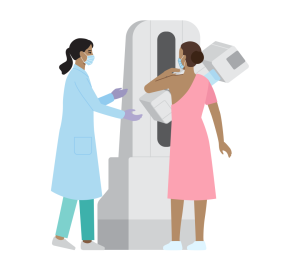
Preventive care includes anticipating how treatments can affect patients later on. For example, patients experiencing pain could be prescribed opioids, but an increase in addiction and deaths related to these drugs led Permanente physicians to seek evidence-based alternatives.
That work is paying off. For example, The Permanente Medical Group in Northern California reduced opioid prescriptions by 79% between 2014 and 2023 — and more than a 40% reduction in high-dose opioid prescriptions between 2022 and 2023.
How health equity and culturally responsive care support quality
Providing culturally responsive care (also called culturally competent care) is an essential element in reducing health disparities and achieving equitable health outcomes. It’s a vital part of the patient-centered care approach and requires consideration of language preferences as well as social determinants of health (access to education, food, housing, jobs), cultural beliefs, attitudes, and behaviors when treating patients.

Across the organization, physicians and care team members strive to deliver culturally responsive care to all patients. Interpreter services and member communications are provided in various languages. Kaiser Permanente offers specific care clinics that serve culture-specific populations such as Latino, Chinese, Black, Armenian, Vietnamese, and LGBTQ patients at several of our medical facilities. Permanente physicians have access to language skills courses and certifications, as well as educational programs and trainings designed to reduce implicit bias and promote inclusion in care delivery.
Examples of quality in specialty care
Kaiser Permanente is also a nation-leading provider of specialty care in categories such as stroke care, heart failure, kidney failure, and colon cancer surgery.
The capacity to provide such care is critical. Specialty care visits account for more than half of outpatient visits in the United States. Specialist visits for older adults — who typically use more health care services than younger people as a percentage of the population — have steadily increased annually, from 68.9% in 2000 to 76.1% in 2019.
In many health care systems, the risk of missed appointments, avoidable errors, duplicative testing, poor outcomes, high costs, and poor care experiences increases as referrals spread patient care among multiple and disconnected specialists. However, Kaiser Permanente’s integrated model addresses and solves issues created by the fragmentation of care.
For example, working in close partnership with operations colleagues, Permanente physicians led the establishment of a better maternal care experience for mothers with our innovative Cocoon Pregnancy Care Program. This program, piloted in Georgia, shows how collaboration between primary care physicians, ob-gyn specialists, nurses, midwives, counselors, and other care team members creates a better care experience. It improves the quality of care mothers receive before, during, and after pregnancy, and addresses socioeconomic and access issues experienced by many women. Ultimately, the program provides mothers the care they need, where they need it, and how they want it.
Our integrated system supports the complexity of the Cocoon Pregnancy Care Program, but this level of primary-specialty coordination is difficult, if not impossible, to achieve in other typically fragmented care environments.
Quality care that meets the moment
Working within an integrated care delivery model and sharing the latest best practices and evidence-based health information empowers physicians to make the best decisions for patients and ensures the highest quality care.
This approach is not only the future of health care, it describes how Permanente physicians practice medicine today. It’s a key driver of how we’re able to consistently deliver expert, highly rated care everywhere we serve: care that’s safe, effective, patient-centered, timely, efficient, and equitable.