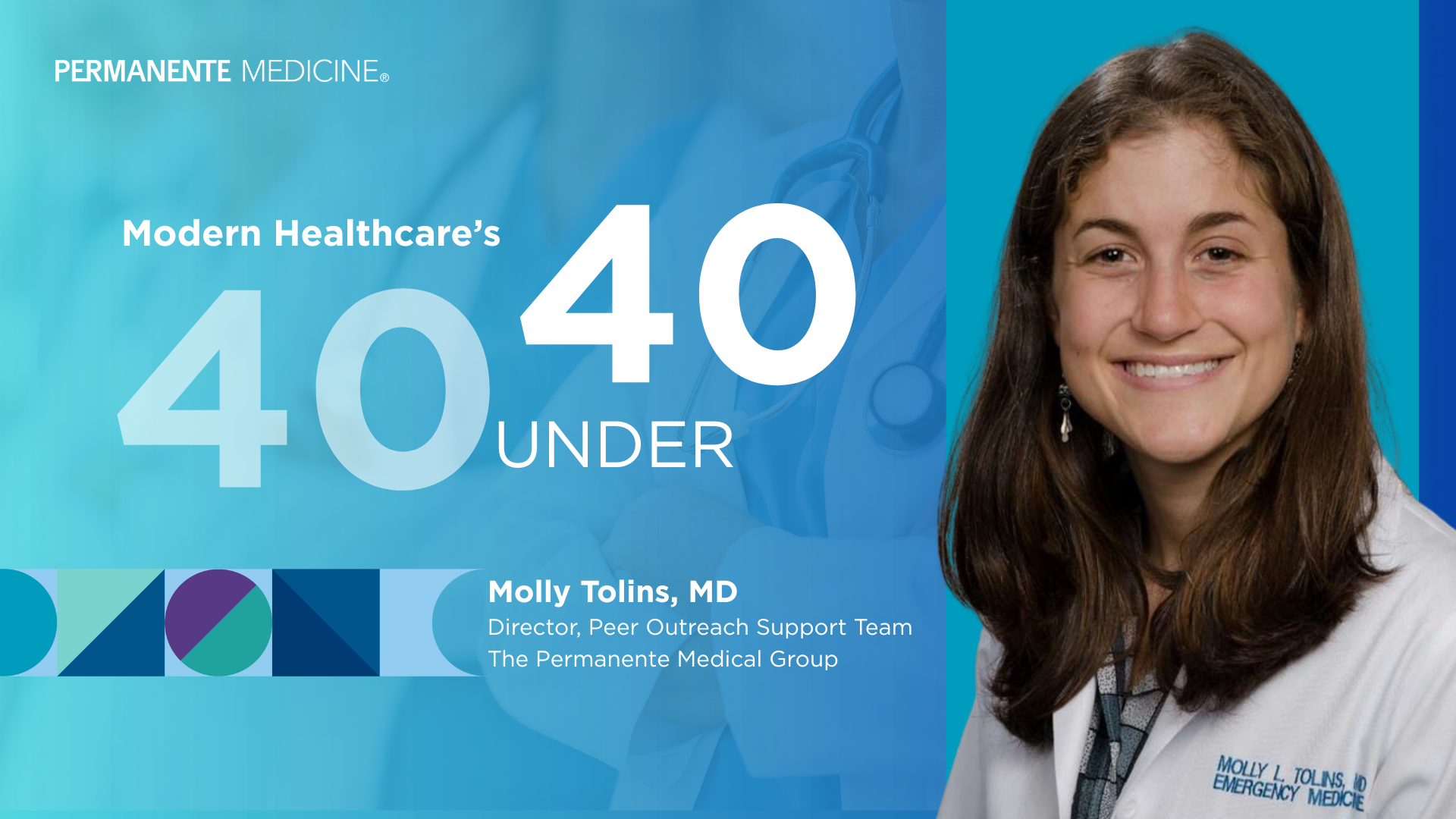
Permanente physician honored for leading peer support program promoting wellness
Kaiser Permanente National Implant Registries Release First External Report


OAKLAND, Calif. – Kaiser Permanente has released its first National Implant Registries Annual Report, highlighting significant achievements in patient safety, quality improvement, and comparative effectiveness research.
The Kaiser Permanente National Implant Registries track medical devices for our members, including those used in cardiology, cardiothoracic surgery, orthopedics, vascular and neurosurgery over the course of a patient’s lifetime. We are currently tracking over 2 million devices.
By keeping track of new technologies and how well they work, it’s easier to figure out which implant is right for the patient based on his or her individual clinical needs. By collecting and analyzing this information for all Kaiser Permanente patients, our Permanente physicians can better answer questions, address concerns, and provide the latest evidence.
“Our Kaiser Permanente National Implant Registries empower us to effectively counsel patients pre operatively and help make informed decisions regarding surgical treatment options,” says Eric Cain, MD, chair of the Orthopedics Chiefs for The Permanente Medical Group.
Data from the national registry helps Permanente physicians predict a patient’s risk for complications, such as infection after surgery. By preparing patients with information about risks and recovery, physicians are better able to manage care before and after surgery to decrease the chance of complications. In rare cases when implants are recalled by the implant company or the U.S. Food and Drug Administration (FDA), the registry allows Kaiser Permanente to identify all the patients who may be affected and reach out to work with surgeons on next steps and corrective action.
Started in 2001, Kaiser Permanente’s registries have become a model for other organizations wishing to track the safety and effectiveness of implantable devices to improve outcomes. Kaiser Permanente collaborates with registries throughout the United States and globally to improve implant surgery outcomes and set standards for data and monitoring. Research has shown the value of these collaborations for linking devices and outcomes. What sets Kaiser Permanente registries apart is our ability to track patient outcomes longitudinally, following a device over the course of a patient’s lifetime.
“Within our learning health care system, the registries provide the cornerstone for patient safety and quality improvement, supporting evidence-based medicine and shared patient decision-making,” said Liz Paxton, director of the National Implant Registries.
“We are delighted to share our learnings to grow the external body of knowledge and improve outcomes and safety for the entire community,” says Tad Funahashi, MD, chair of the inter-regional implant registries at Kaiser Permanente. “This work is revolutionizing patient safety and decision-making.”
Examples of this success highlighted in the annual report include:
• Reducing length of hospital stay for home-based recovery following surgery
• Tracking and identifying the best performing medical devices for our members
• Redesigning patient educational material and follow-up protocols to reduce emergency room visits by 50 percent
• Identifying factors associated with hospital readmissions
• Using risk calculators for shared decision making at the point of care
For more information, visit national-implantregistries.kaiserpermanente.org.
Click here to learn more about Kaiser Permanente registry work.
Related Posts