The Permanente Federation co-CEOs share 7 strategies to build a trustworthy, affordable and accessible health care system for the next generation
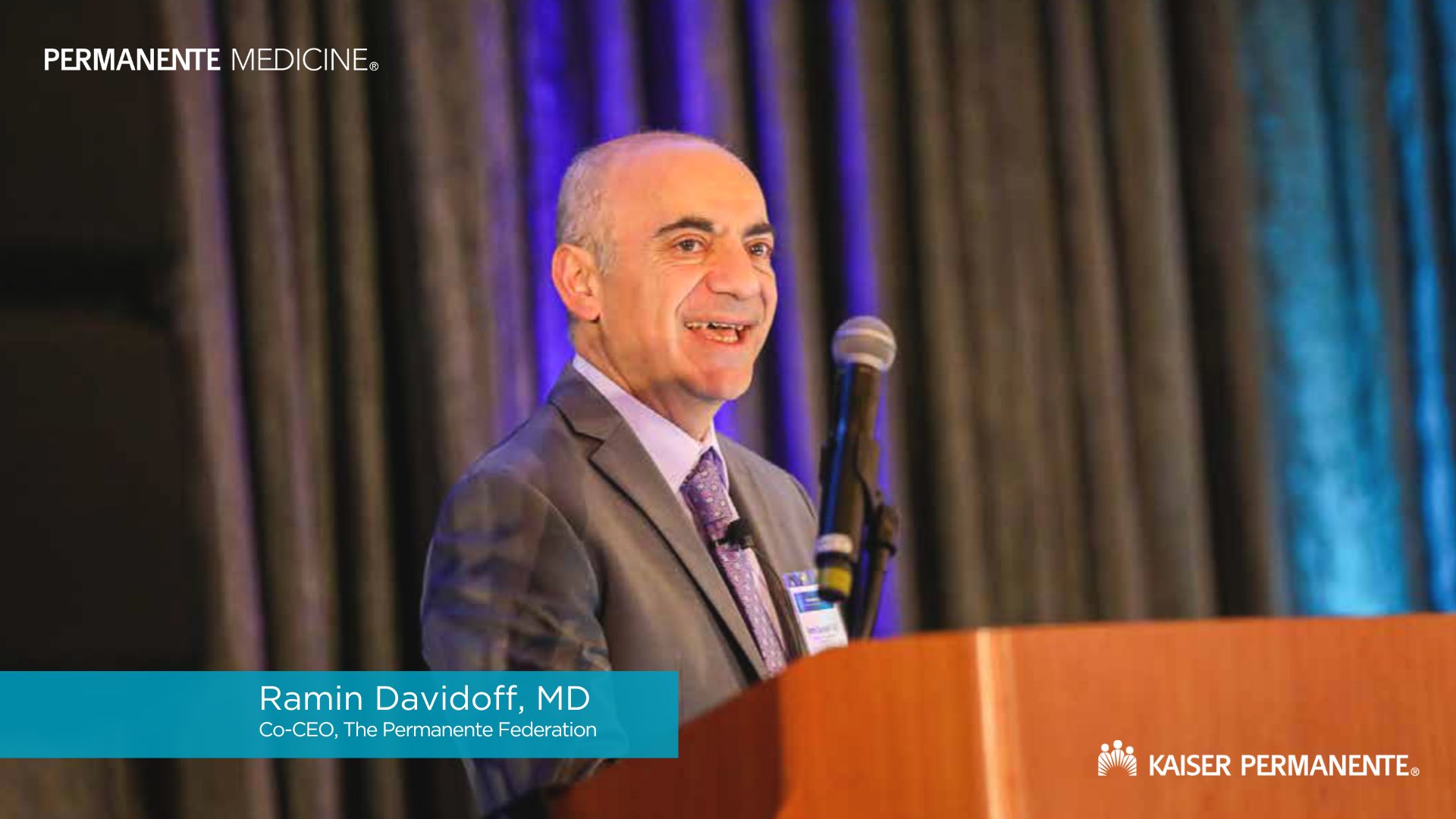
Ramin Davidoff, MD, named among Top 10 Health Care CEOs in America


The CEO Forum recently named Ramin Davidoff, MD, co-CEO of The Permanente Federation, among its Top Ten CEOs Transforming Healthcare in America in the exclusive category of Comprehensive Care. The CEO Forum is one of the nation’s leading platforms where CEOs from many industries share their perspectives, stories, and leadership lessons.
Dr. Davidoff was selected for his leadership in deploying advanced precision-medicine pathways, 24/7 virtual urgent care, and AI-powered scribe technology. He was recognized for this honor at the recent virtual 5th Annual Healthcare Transformative CEO Summit.
During a panel at that summit, Dr. Davidoff said the U.S. health care system is shifting from fragmented, fee-for-service models to value-based care models, which emphasize prevention, personalization, and high-quality outcomes. He cited Kaiser Permanente as a longstanding example of value-based care.
“Our Kaiser Permanente system has been in place for 80 years, so it’s been 8 decades of building on a value-based care model that’s still in practice today,” Dr. Davidoff said during the panel. “That model is based on the concept of being prepaid, capitated, and designed to keep people healthy — not just treat them when they get sick.”
Related value-based care story: Unlocking the potential of value-based care
To shift to value-based care, Dr. Davidoff said health care organizations must align incentives and prioritize patient values, needs, preferences, and experiences.
“Everyone can win if we align the incentives between the medical groups, the hospitals, the health plans, the care delivery models, in a patient-centered way that produces high-quality outcomes,” Dr. Davidoff said. This approach is fundamental to Kaiser Permanente’s value-based care model, which emphasizes care coordination, disease prevention, early detection, and population health management.
He also underscored the importance of focusing on key health care performance indicators. “Time to diagnosis is absolutely a key part of that but resolving the actual issue — as opposed to creating multiple encounters and touch points — is the key to improving the health care system in terms of affordability as well as quality in this country.”
Dr. Davidoff noted that value-based care organizations make significant upfront investments to redesign processes, establish care coordination programs, and upgrade health IT infrastructure. Examples of these investments include electronic health records, which give care teams real-time access to complete patient health information and connect visits, prescriptions, and test results in one place. This coordination helps reduce errors and improve outcomes. They also invest in AI-driven analytics to help track patient outcomes, identify care gaps, and manage population health more effectively.
Dr. Davidoff said these types of investments are central to advancing personalized medicine, especially in cancer care. Examples include AI algorithms trained on mammogram images to predict breast cancer risk, computer vision for analyzing pathology slides, and automation in radiology and lab result processing.
Related value-based care story: Dr. Davidoff on how value-based care incentivizes smart investments in AI
Successfully shifting to value-based care also requires health systems to address the challenges of care access and patient motivation, Dr. Davidoff said.
Fortunately, Kaiser Permanente has been continuously working to expand care access through virtual and in-person care as well as a suite of digital tools that help patients manage their health care efficiently. These include a mobile app and online portals for appointments, refills, secure messaging, and to view test results and personal health records.
To motivate patients to engage in their own health care, Dr. Davidoff said, “we have robust educational programs around diabetes, hypertension, heart failure, renal failure, and smoking prevention programs. We believe if these are provided in a culturally sensitive way and in multiple languages, they truly do motivate people to seek health, to prevent disease, and to go for the resources that are available through systems like ours.”
Watch a recording of the virtual panel here.
To learn more about Dr. Davidoff, check out the Winter issue of The CEO Forum magazine. Subscription may be required.
To see a summary of The CEO Forum list, visit Becker’s Hospital Review.
Related Posts