Learn how Permanente physician leaders Kristine Lee, MD, and Khang Nguyen, MD, are transforming health care through AI, virtual care, and digital innovation
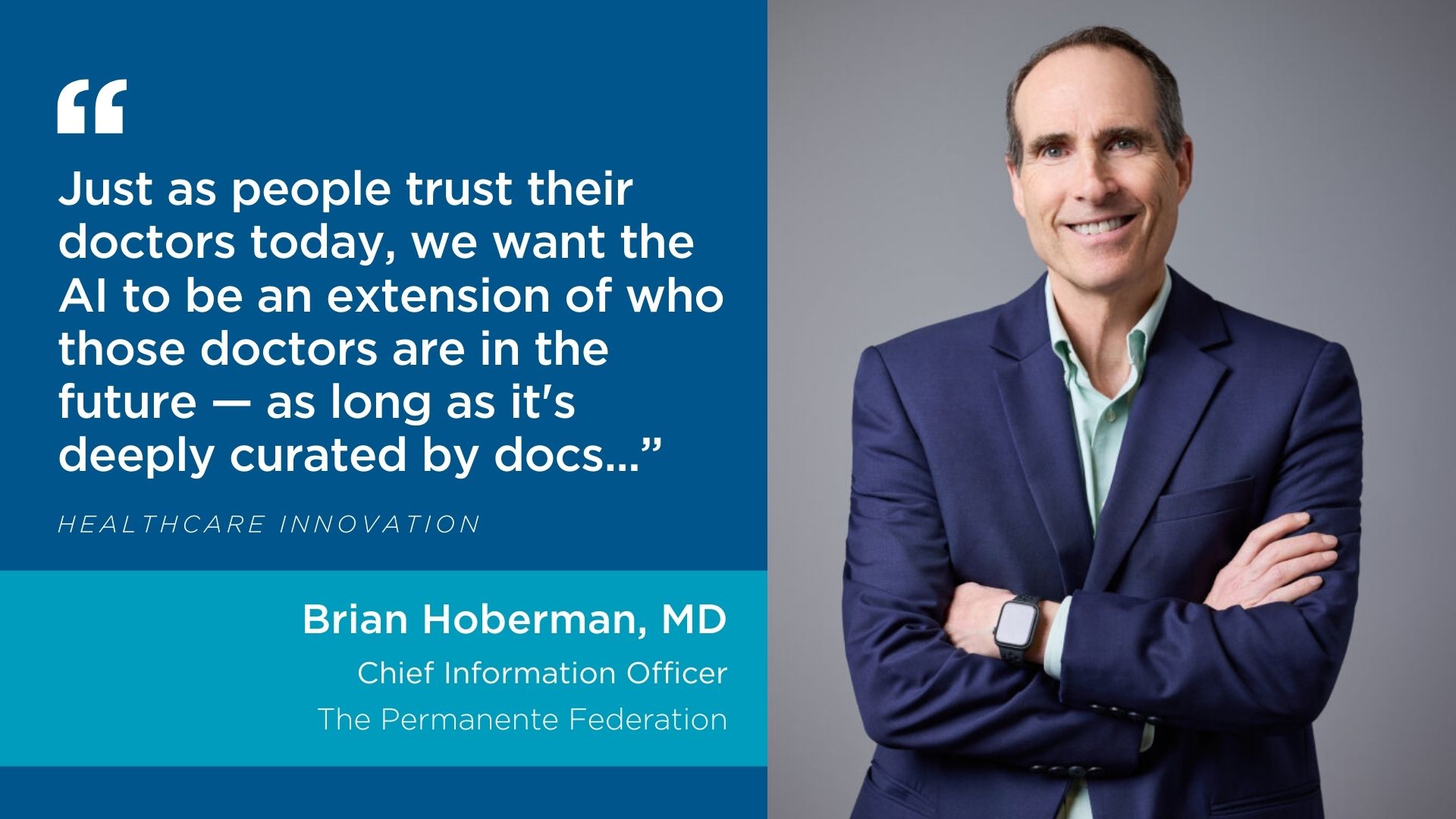
Brian Hoberman, MD, on how AI can redefine care navigation


At a recent Centers for Medicare & Medicaid Services conference, Brian Hoberman, MD, chief information officer and executive vice president at The Permanente Federation, painted a compelling picture of what lies ahead for the future of patient care. As health care organizations grapple with information overload and the administrative burdens that go with it, Dr. Hoberman spoke of the next leap: leveraging artificial intelligence to sift through the data and guide patients to the right care at the right time.
“When I think about burden reduction, I think about navigation, and when I think about AI, I think about having a tool that can process this monumental amount of information and lead to the best possible navigation,” he explained.
Related AI story: Responsible use of AI in health care
This vision is about both improving the patient experience and giving clinicians the tools they need to focus on care and building trust. “Just as people trust their doctors today, we want the AI to be an extension of who those doctors are in the future — as long as it’s deeply curated by docs and the delivery system trusts it by constantly scrutinizing it, making sure that it’s doing what we think it’s going to do.”
Ambient scribe technology: An AI-driven tool that is making a difference
Ambient scribe technology — AI that “listens” during patient encounters and documents them in real time — has already gained enthusiastic response from Permanente physicians for the time it saves them taking notes during office visits. But this saved time isn’t being funneled into increasing patient panels, it’s being reinvested in quality care. As Dr. Hoberman put it, “Fortunately, the answer that we ultimately all agreed on was no, let’s use the time saved to do better patient care, because nobody’s going to just leave early … Take that burden off their back and watch what happens.”
The result? Higher patient satisfaction, less provider burnout, and better outcomes. Dr. Hoberman attributes this to the responsible and strategic application of AI, emphasizing that building trust in these technologies requires ongoing feedback and monitoring. He also highlighted the need to balance automation with regulatory compliance and human oversight, particularly in areas like translation services.
Kaiser Permanente’s approach demonstrates that innovation in health care is about thoughtfully integrating tools that empower patients and clinicians alike. The health care industry would do well to heed his advice: invest in AI not to do more, but to do better.
Read the full Healthcare Innovation article.
Related Posts