Explore how AI can redefine care navigation and transform patient experiences in today's health care landscape.
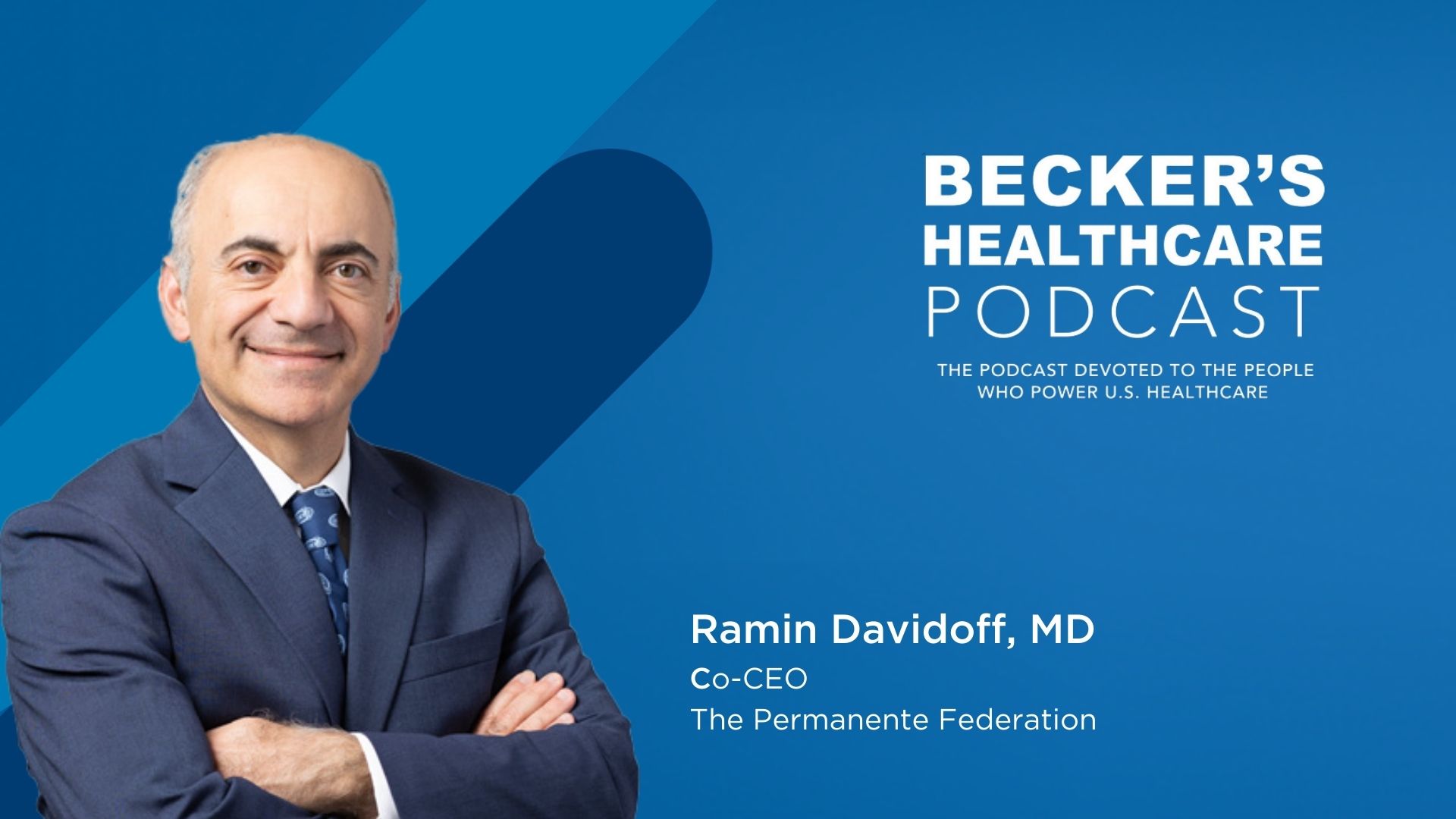
Dr. Davidoff spotlights value-based care and workplace safety


The U.S. health care system is operating in an increasingly complex environment defined by financial pressures, rapid adoption of artificial intelligence, and volatile regulatory changes. These forces are prompting health care leaders to search for a sustainable path forward.
In a Becker’s “Leadership Unscripted” podcast, Ramin Davidoff, MD, co-CEO of The Permanente Federation, said he believes value-based care “absolutely deserves a much brighter spotlight as the answer to the issues that we have around health care in our country.”
Unfortunately, “Much of the care in this country is not based and focused on value,” he said, underscoring the urgency of reform.
Related value-based care story: Dr. Davidoff on rebuilding patient trust through value-based care
At Kaiser Permanente, he added, “Value-based care rewards positive health outcomes rather than volume of services that are provided. It focuses on prevention and early detection of disease; on keeping people healthy proactively; on managing chronic diseases to prevent complications and hospitalizations; and on truly greater health outcomes for our patients and communities, not solely on revenue generation.”
According to Dr. Davidoff, the key to improving health care in the U.S. is aligning incentives by restructuring payment models and organizational goals to reward physicians and clinicians for high-quality, efficient care instead of the quantity of medical visits, procedures, or tests performed. “Aligning incentives to provide outstanding patient outcomes has to be front and center for our country to be successful because the current model is, frankly, absolutely unsustainable and we need to do something different,” he added.
Addressing workplace safety concerns
Dr. Davidoff also talked about another area requiring more focus: ensuring workplace safety amid rising violence in health care settings. An American College of Emergency Physicians’ 2022 survey that showed 85% of emergency physicians believe the rate of violence experienced in emergency departments has increased over the previous 5 years. A more recent poll showed that 91% of emergency physicians said they, or a colleague, had been threatened or attacked in the past year.
Dr. Davidoff himself experienced violence as a practicing urologist, adding that the issue deserves a much larger focus through legislation and through different organizations involved in assuring that violence does not impact the workplace. “Workplace violence in a health care setting impacts the safety and the quality of the care that is provided for patients. And it certainly impacts the safety of our physicians, staff, and nurses,” he said.
Related physician leadership story: Dr. Davidoff on leadership in turbulent times
A safe work environment means higher satisfaction rates for physicians and clinicians and optimal care for patients. To support workplace safety, Dr. Davidoff noted that Kaiser Permanente and the Permanente Medical Groups have taken steps to address such violence, including seminars and training sessions that help physicians and care teams recognize the early signs and signals of potential violence. They also received training in de-escalation techniques.
Additional measures include implementing metal detectors in high-risk areas like emergency departments and enhanced security presence in hospitals and clinics. “We’ve communicated it, and we’ve done our best to deliver on what’s needed to help people feel safe in the workplace.”
To hear the full interview, visit Becker’s Healthcare Podcast.
Related Posts