Ramin Davidoff, MD, on the importance of value-based care and the urgent need to address workplace safety in health care settings.
Transforming the patient navigation experience starts at the digital front door


Khang Nguyen, MD
Let’s be honest: For all the opportunity technological advancements bring, they can just as easily create new frustrations. I would run out of fingers before I could count the number of poor customer service experiences I’ve had with online or telephone chatbots, which never seem to have the option I need. What frustrates me most is lack of basic oversight from — or an easy offramp to — human customer service professionals.
Just as we expect convenience, speed, and options in everyday life — like choosing a bed size when booking a hotel room or selecting a table when making a restaurant reservation — we now expect a similar user experience in health care. Patients expect health care portals to streamline access to personal health information, facilitate communication with providers, and simplify appointment scheduling. However, these digital tools often fall short, resulting in patient frustration.
A new approach: Kaiser Permanente Intelligent Navigator
Motivated by this observation, our team in Kaiser Permanente in Southern California saw the opportunity to create a new and improved patient navigation portal unlike anything else in the American health care system. Enter the Kaiser Permanente Intelligent Navigator (KPIN), which harnesses physician expertise and advanced artificial intelligence technology to provide patients with a seamless experience as they access care and retrieve health information.
Related transforming patient navigation story: AI-powered patient portal enhances access, safety, and patient satisfaction
Powered by Natural Language Processing — a form of artificial intelligence — this tool was built into established workflows, providing 4.9 million patients in the region with a more seamless, timely, and personalized experience through its patient portal. It allows patients to describe their health care needs and questions in their own words — not via preset menus — and then recommends the most clinically appropriate action. This could range from scheduling an appointment to making a walk-in visit, requesting a prescription refill, or speaking with a clinician. The KPIN functions like a driver, bringing patients where they need to go.
Built by clinicians, designed for patient safety
We are proud to say that the KPIN is a custom-built digital customer service platform, designed in collaboration with physicians and clinical operational leaders. Safety was top of mind as we developed this tool. KPIN watches closely for any indication that a patient is facing a medical emergency. For example, if a patient writes they are experiencing chest pain, the system recognizes that they require immediate attention versus a future appointment. The patient will immediately be connected to a nurse to discuss their symptoms and be directed to an emergency department, if needed.
Related AI story: Building trust in health care through better AI governance
A recent paper in Nature showed the platform detected urgent medical cases with 97.7% accuracy and increased patient satisfaction by 8.6%. Across health care, only 3 out of 10 patients who attempt to book appointments online are successful. Meanwhile, more than half of patients who used KPIN made timely and appropriate appointments, empowering them to take a more active role in managing their health and health care.
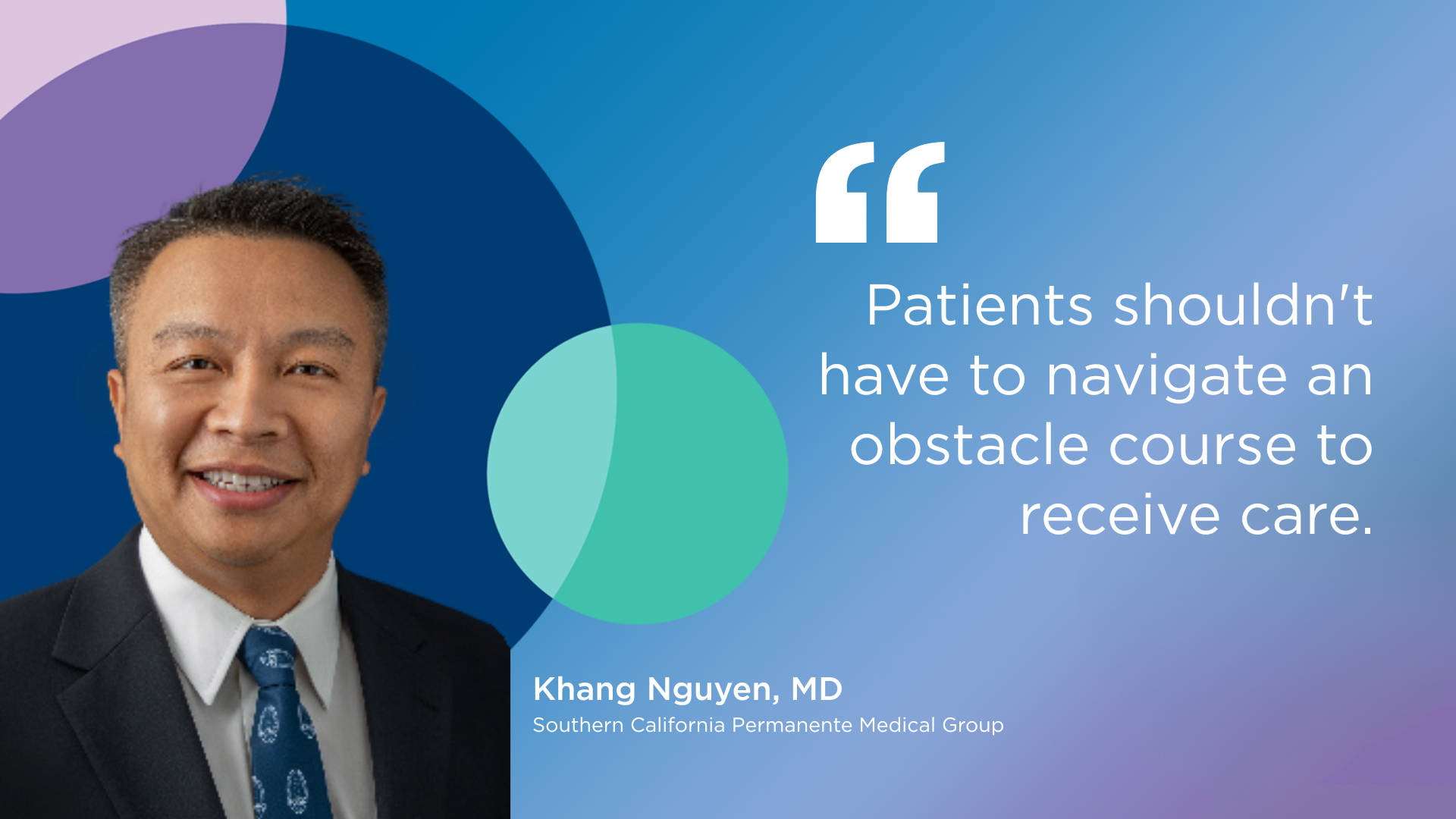
Patients shouldn’t have to navigate an obstacle course to receive care. The process — from seeking care to seeing their doctor — should be straightforward. KPIN is an innovative tool that helps make the entire care journey seamless, from the first point of contact to achieving a quality outcome — bringing the patient experience into a new era.
Khang Nguyen, MD, is assistant executive medical director of Care Transformation at Southern California Permanente Medical Group.
Related Posts