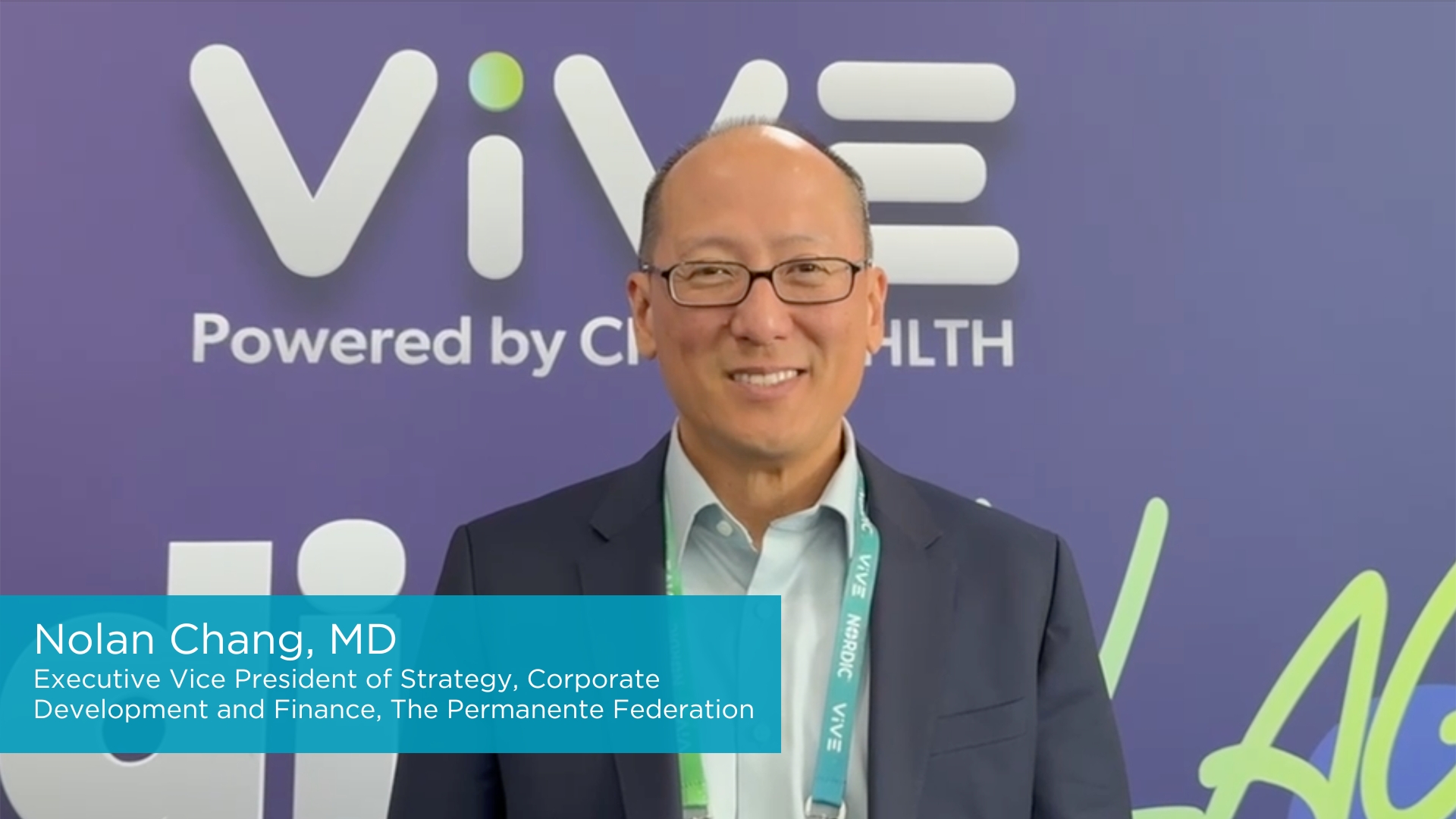
Nolan Chang, MD, shares ways Kaiser Permanente is using AI to better the patient experience and reduce physician burnout.

Dr. Parodi on meeting health care workforce and policy challenges


Two major challenges are currently testing the ability of health care organizations to provide sustainable, high-quality care: a looming physician shortage and far-reaching federal policy changes.
On a recent episode of Becker’s Healthcare Podcast, Stephen Parodi, MD, executive vice president, External Affairs, Communications and Brand for The Permanente Federation, explored how patient outcomes will depend on supporting the physician workforce and minimizing coverage loss due to policy changes like evolving Medicaid requirements.
Dr. Parodi noted the U.S. could see an estimated shortage of up to 86,000 physicians by 2034, according to data from the Association of American Medical Colleges. In response, Kaiser Permanente is working to enable practicing doctors with digital support tools like artificial intelligence to help meet growing demands while at the same time easing burnout.
“Even if we are able to expand the workforce through some policy decisions, we’re going to have a very large, aged population,” said Dr. Parodi. “If you want to be able to expand the reach of our existing workforce, it’s going to need to be supported by AI.”
One such innovation that is creating real value, according to Dr. Parodi, is an early-warning tool that uses predictive analytics to identify patients at risk of clinical deterioration and in need of more immediate services, including acute care. The AI-driven Advance Alert Monitor, used in all 21 Kaiser Permanente hospitals in Northern California, detects patients who may be heading toward clinical decline, enabling early intervention. So far it has prevented more than 500 deaths annually.
Other innovations include:
- Launching AI-powered ambient scribe technology, a game changer in reducing time spent on administrative tasks. Both patients and physicians have reported improved interactions when using the tool.
- Creating flexibility in clinical schedules and more opportunities in virtual patient visits, including “virtual list positions” which allow moving to a virtual-only practice.
- Employing team-based care to streamline workflows and improve service and access by enabling all team members — including physicians — to practice at the top of their license.
- Prioritizing physician wellness efforts at the organizational level, as recognized by the American Medical Association’s Joy in Medicine® program. The AMA recognized 5 Permanente Medical Groups in 2025.
Turning to the impact of the new HR-1 law — which creates eligibility requirements that will complicate access to care for current Medicaid patients — Dr. Parodi reaffirmed the importance of preserving access to high-quality care for those currently enrolled in the program.
That will mean working with partners on the state level to think through ways to minimize coverage loss over the 10-year implementation period of HR-1, said Dr. Parodi. Plus, exploring the services and support patients may need to complete paperwork involved in redetermining coverage eligibility.
“If there’s anything we’ve seen with health care policy over the last 15, 20 years is that when you do provide more coverage, you actually get better outcomes when it comes to preventive services, cardiovascular disease outcomes, and cancer screening outcomes,” said Dr. Parodi.
Related health care policy story: Dr. Parodi on how recent policy changes impact Medicaid
Listen to the full podcast here.
Related Posts