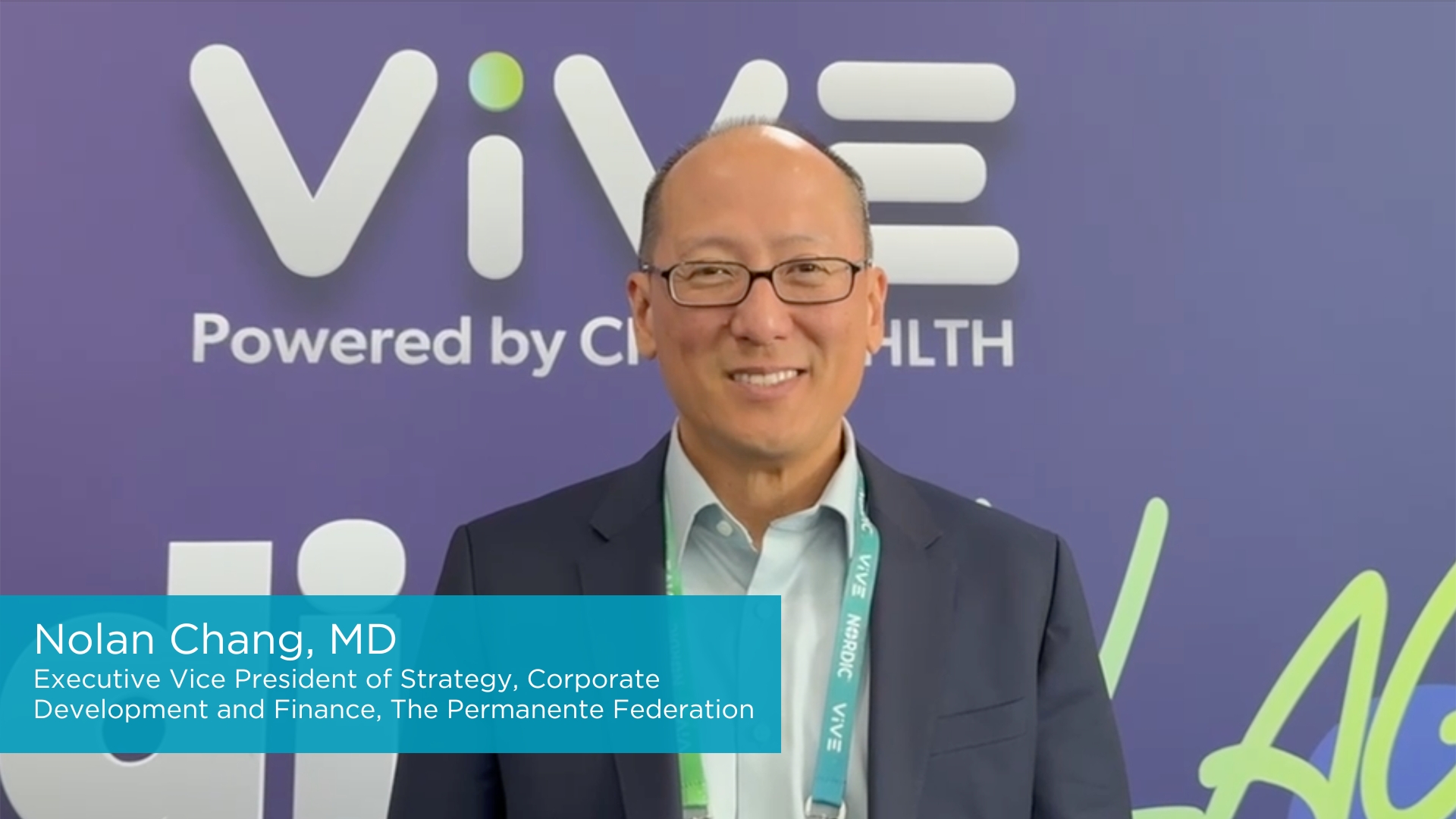
Nolan Chang, MD, shares ways Kaiser Permanente is using AI to better the patient experience and reduce physician burnout.
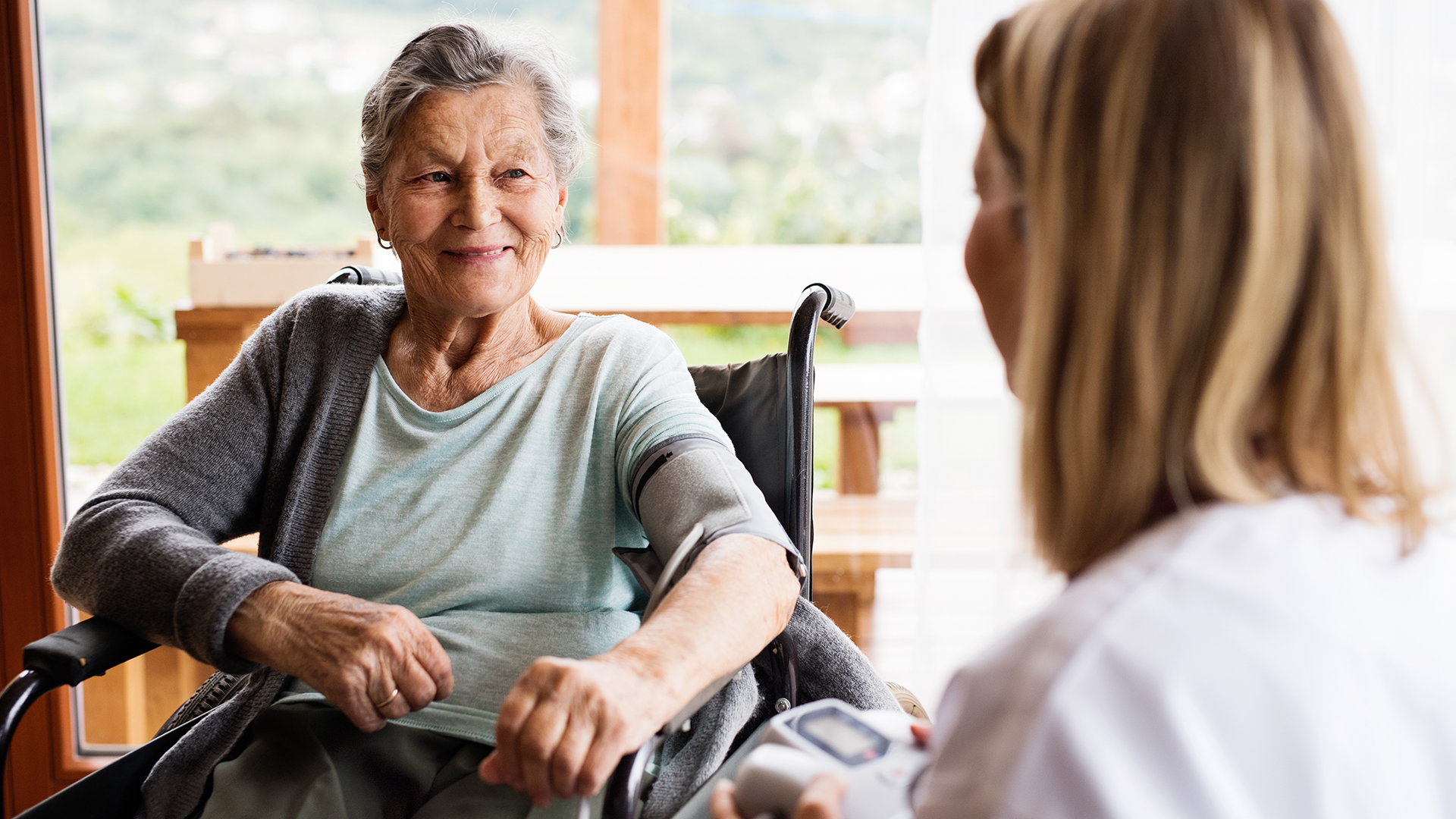
Advanced Care at Home: Expanding options for at-home recovery


How Permanente Medicine is helping patients receive safe, coordinated, advanced medical care in the comfort of their homes
By Brent Johnson
The Permanente Federation
Doris Dillahunty remembers the date: “July 6 is when I became very ill,” she said. “My stomach was killing me by the time I got to the hospital.”
Doris learned she had an intestinal infection, an acute illness that usually means days spent in a hospital bed. But she was offered an alternative approach.
“The next day, they came in and talked to me about Advanced Care at Home,” Doris recalled. “I told them I would love it. There’s nothing like being at home when you’re sick.”
Advanced Care at Home is Kaiser Permanente’s program to deliver closely supervised medical care in the home of an eligible patient. Permanente physicians across Kaiser Permanente markets led the development of the program, working closely with hospital and health plan colleagues.
“We’ve taken a model and transformed it to capitalize on Kaiser Permanente’s strengths as an integrated delivery system,” said Dan Huynh, MD, who helped establish an advanced care at home program in 2013 for Southern California Permanente Medical Group and now serves in a leadership role overseeing hospital-based services, as well as the advanced care at home program, in Orange County.
“Many people heal best in familiar settings, in the comfort of their own homes,” said Hemali Sudhalkar, MD, national medical director of Strategy for Kaiser Permanente Care at Home and medical director at The Permanente Medical Group. “Advanced Care at Home gives eligible patients the option to receive advanced medical care in their homes, rather than stay at the hospital.”
Related Advanced Care at Home podcast: Dr. Hemali Sudhalkar on the future of care at home
Advanced Care at Home doesn’t replace hospitals and it is not a hospital program. The program expands options for Permanente physicians to deliver care to patients who need advanced medical treatment and close oversight, but don’t require an inpatient setting.
Since 2022, the program has delivered over 30,000 episodes of care to Kaiser Permanente members, according to internal program data. An “episode of care,” a measure commonly used in value-based care models, reflects all the health services a patient receives for a specific condition or procedure during a certain time period.
For Doris, the difference showed up in access, flexibility, and responsiveness. “Whenever I’m in distress or need to talk to a doctor or nurse, I can always call them, 24/7,” she said. “Even when they brought in the X-ray machine, it didn’t take more than 5 minutes. It was like, oh wow.”
Integration makes Advanced Care at Home possible
Concepts of providing advanced care at home have been discussed for years, but making such clinical experiences consistent and safe at scale calls for more than video visits. It requires tight, sophisticated coordination of physicians, care teams, and clinical infrastructure. The preconditions for effective implementation pose steep challenges to many U.S. health organizations because traditional care is often fragmented among specialized roles across the continuum of care.
Kaiser Permanente’s integrated, value-based care philosophy and practice — called Permanente Medicine — connects all aspects of a patient’s course of care by supporting clinical accountability and seamless transitions. Permanente physicians can provide acute care safely in patients’ homes because the clinical, operational, and coverage components are in place.
Ehrine Deloriea, MD, helped establish Northwest Permanente’s home care program in 2020. Today, as regional chief of Hospital Medicine, she sees how Kaiser Permanente’s integration brings together clinical teams who deliver advanced home care every day.
“This is one of the most collaborative groups I’ve ever worked with — physicians, nurses, paramedics, health plan partners,” she said. “There’s an enormous amount of work happening in the background that patients never see.”
That collaboration enables a new kind of medicine. “Although I’m a hospitalist, Advanced Care at Home also provides me the opportunity to treat patients in their homes.” Dr. Deloriea said.
The future of U.S. health care
The broader implication for care delivery is clear: Many forms of acute care can occur in a clinically safe, non-hospital space. Advanced Care at Home offers a practical response to the multiple pressures facing U.S. medicine, such as capacity constraints, rising costs, and patients who desire convenient, high-quality care.
“If a patient doesn’t need to be in a hospital bed surrounded by alarms and hallways, we should be asking whether there’s a better place to heal,” Dr. Sudhalkar said.
Dr. Huynh added that the program can expand access to advanced medical care without standing up new facilities. “Just in Southern California alone, we’re enrolling enough patients to fill a small facility,” he said.
Dr. Deloriea agreed that health care will occur where patients live. “The future is virtual,” she said. “We’re probably going to see this kind of care continue to grow.”
Related innovation story: Driving health care innovation in 10 steps
Preserving well-being for both patients and physicians
While patients remain the focus of Advanced Care at Home, the model can benefit physicians as well.
For Dr. Deloriea, Advanced Care at Home preserves what she values most about advanced medicine — its speed, impact, and measurable improvement — while offering flexibility in how care is delivered.
“To be able to sit in front of a screen and still deliver advanced medical care, and see results in real time, that’s really amazing,” she said. “And physicians … get more diversity in how they practice. From a work-life balance perspective, it’s been great.”
In the end, the program’s success is best measured by whether patients feel safe, supported, and able to heal comfortably. Results of internal surveys show that 86% of patients who’ve experienced Advanced Care at Home would seek similar care again.
Count Doris among them. “I think Kaiser Permanente has an excellent program,” she said. “I can be in my own bed, around my family, my kids, grandkids — and that important environment helped me heal well.”
Related Posts