As Americans live longer, physicians across specialties must be prepared to deliver age-friendly care that honors older adults’ goals, dignity, and independence.
Five lessons I learned from Permanente physicians in 2025


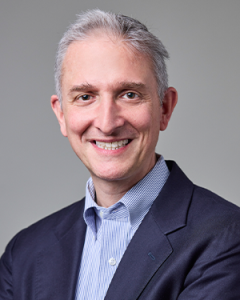 Stephen Parodi, MD
2025 was a whirlwind of a year for health care. Rapid changes to federal policy and widespread adoption of artificial intelligence and other technologies occurred simultaneously and at an unprecedented pace — which meant physicians, clinicians, and health care leaders had a lot to learn, process, and ultimately decide on how to take action.
At Kaiser Permanente, I’m privileged to be surrounded by incredible leaders, innovators, and healers who devote themselves to finding solutions to the challenges we face — and who share those insights for the betterment of not only our patients but the entire U.S. health system.
As we begin 2026, I’d like to share some insights from 2025 that I’m carrying into the new year.
Commitment is our superpower
Kaiser Permanente communities in Southern California began 2025 facing disaster amid two of the most destructive wildfires in the state’s history. The Southern California Permanente Medical Group, in partnership with Kaiser Foundation Health Plan, sprang into action to protect the health and well-being of their community. Jeremy Maggin, MD, and Christopher Subject, MD, joined the PermanenteDocs Chat podcast to discuss their response to the crises.
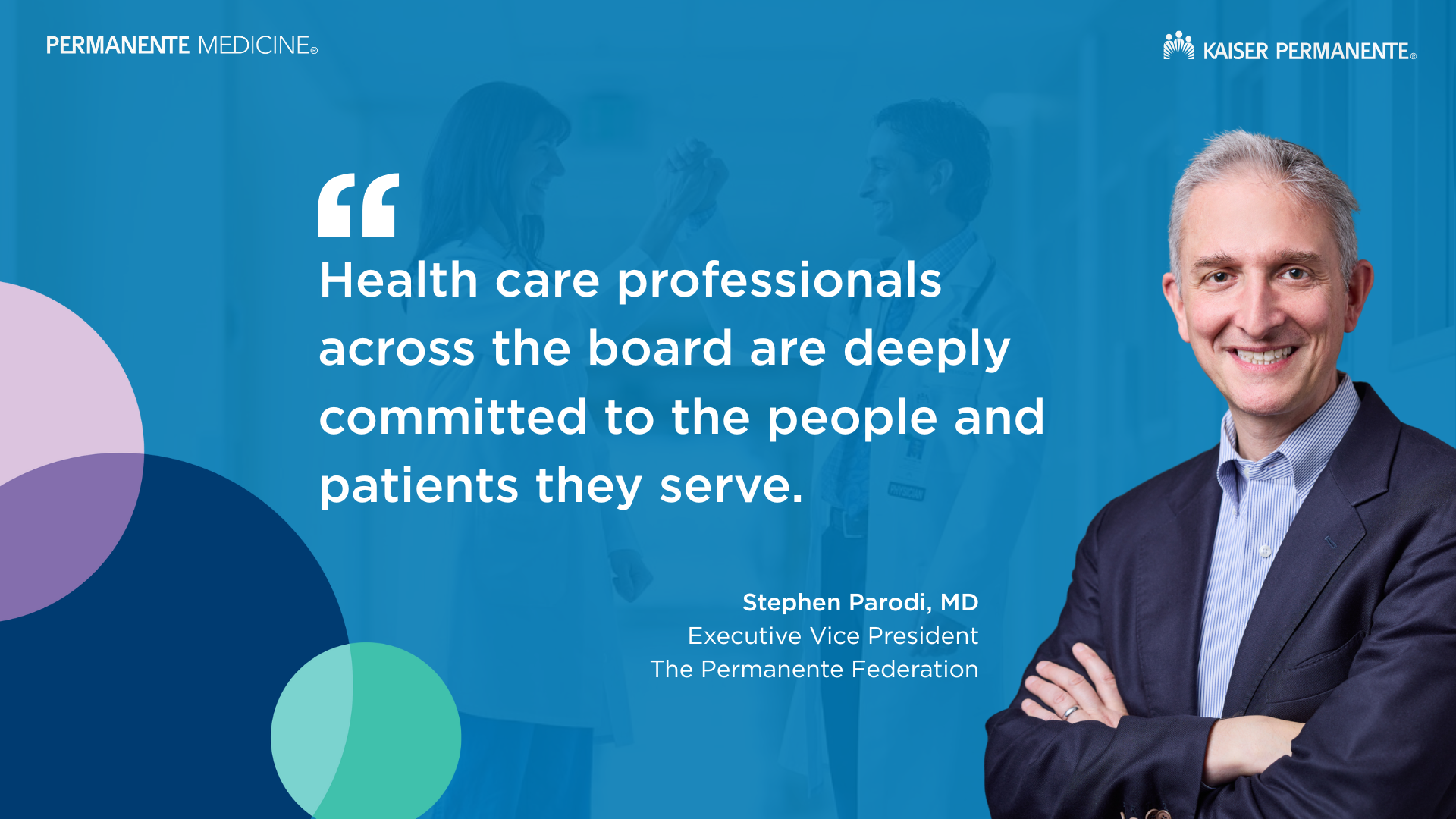
Their conversation reminded me of something I’ve long known: Health care professionals across the board are deeply committed to the people and patients they serve. If you are dedicated to restoring health, you can’t resist the call to help others and contribute to the strength and resilience of those that surround you. Throughout 2025, I saw this dedication exemplified industry-wide and across Kaiser Permanente as we navigated health care funding cuts, disease outbreaks, and more. We persevered, prioritized people, and adapted to what seemed to be ever-changing circumstances.
Clinical integration will unleash technology’s potential
I had the pleasure of moderating a discussion on digital health and artificial intelligence technologies during a December Permanente Live webinar. Our guests, Kristine Lee, MD, associate executive director of The Permanente Medical Group, and Caroline Pearson, executive director of the Peterson Health Technology Institute, shed much-needed light on health technology’s potential as health systems race to adopt it.
Intentional integration of new technology into existing systems that are already achieving excellent results and establishing a shared method to evaluate their performance will ensure technology is built on a strong foundation. Rather than slapping tech on top of clinical programs like a bandage, we need to incorporate it into programs that are designed by well-meaning, well-intentioned, and well-informed humans. As Dr. Lee and Ms. Pearson pointed out, digital health technologies like wearables can produce rich data. Accompanied with a defined purpose informed by clinicians, the abundant, newly accessed information will amplify the reach of our workforce that has been strained by the challenges of increased demand for health services.
Pediatric care is community care
When a community doesn’t have a pediatrician, it’s missing a critical source of trusted medical information. In this age where people don’t know where to turn for the latest reliable information, we know people still trust doctors and nurses as key professionals who can help them make decisions about themselves and their family. We are all working to overcome the increasing volume of misinformation. That has never been more apparent with the increased volume of questions regarding childhood vaccinations. With the return of diseases we only used to read about in textbooks, the medical and parental communities are all asking how we can best protect ourselves and our communities. The best antidote to confusion is ensuring every parent has access to speak with a physician before making decisions about their child’s care, no matter where they live.
Eloa Adams, MD, shared on a PermanenteDocs Chat podcast episode how Kaiser Permanente is not just prioritizing pediatric care but prioritizing young people and children in the communities they serve. By living and working in these localities, Permanente physicians become a part of the community itself. Their trusted voices help protect each patient, each family, and the entire region that we serve.
Millennials and Gen Z will usher in a new engaging era of health care
Millennials and Gen Z are emerging as the primary consumers of health care and are shaping its future. At the same time, the traditional doctor-patient relationship is fundamentally changing with the presence of generative AI and online search. No longer are professionals the sole source of information or authority in an exam room. While these changes may seem disconcerting to some, it is truly an opportunity to redefine how patients and physicians access information through advanced techniques, while still retaining the humanity that is so important to healing. Young people expect the same level of engagement they receive in retail, which heightens the stakes for health care systems to get it right. The organizations that best respond to those expectations will thrive by meeting the complex health needs of new generations.
In this Harvard Business Review article published in December, my colleagues Ramin Davidoff, MD, and Maria Ansari, MD, FACC, co-CEOs of The Permanente Federation, made a clear case: Health care for millennials and Gen Z can’t be built on legacy models. The trust these generations want comes from care that is preventive, affordable, digitally seamless, and grounded in mental health, supported by AI and virtual tools that enhance the human connection. When we listen, simplify, and meet younger patients where they are, we don’t just modernize care, we make it work.
Physician leaders create the right environment to deliver high-quality care
Heading into the new year, I’m grateful to Letitia Bridges, MD, executive vice president and chief quality officer for The Permanente Federation, for a very important reminder: The infrastructure we create as physician leaders has incredible influence over the quality of care physicians can provide. Quality is an expectation by all of us, and we can’t take it for granted.
On the Permanente Medicine Podcast, Dr. Bridges explained that true excellence in clinical quality requires physician leaders to create an environment conducive to it. Ultimately, it’s up to us to set our patients and physicians up for success.
Looking ahead
I’m grateful to those guests who shared their insights on our programs and the teams that brought these shows to life. The future of health care will be shaped by leaders and clinicians grounded in reality and inspired by the hope we can create a new way to care for each other.
I look forward to this year’s thoughtful, physician-led dialogues on the issues shaping our profession. The challenges ahead — technological, clinical, and systemic — require collaboration, humility, and leadership rooted in practical care delivery. I’ll be keeping an eye on Permanente Insights for more. I hope you will, too.
Stephen Parodi, MD, is executive vice president, External Affairs, Communications and Brand for The Permanente Federation.
Related Posts