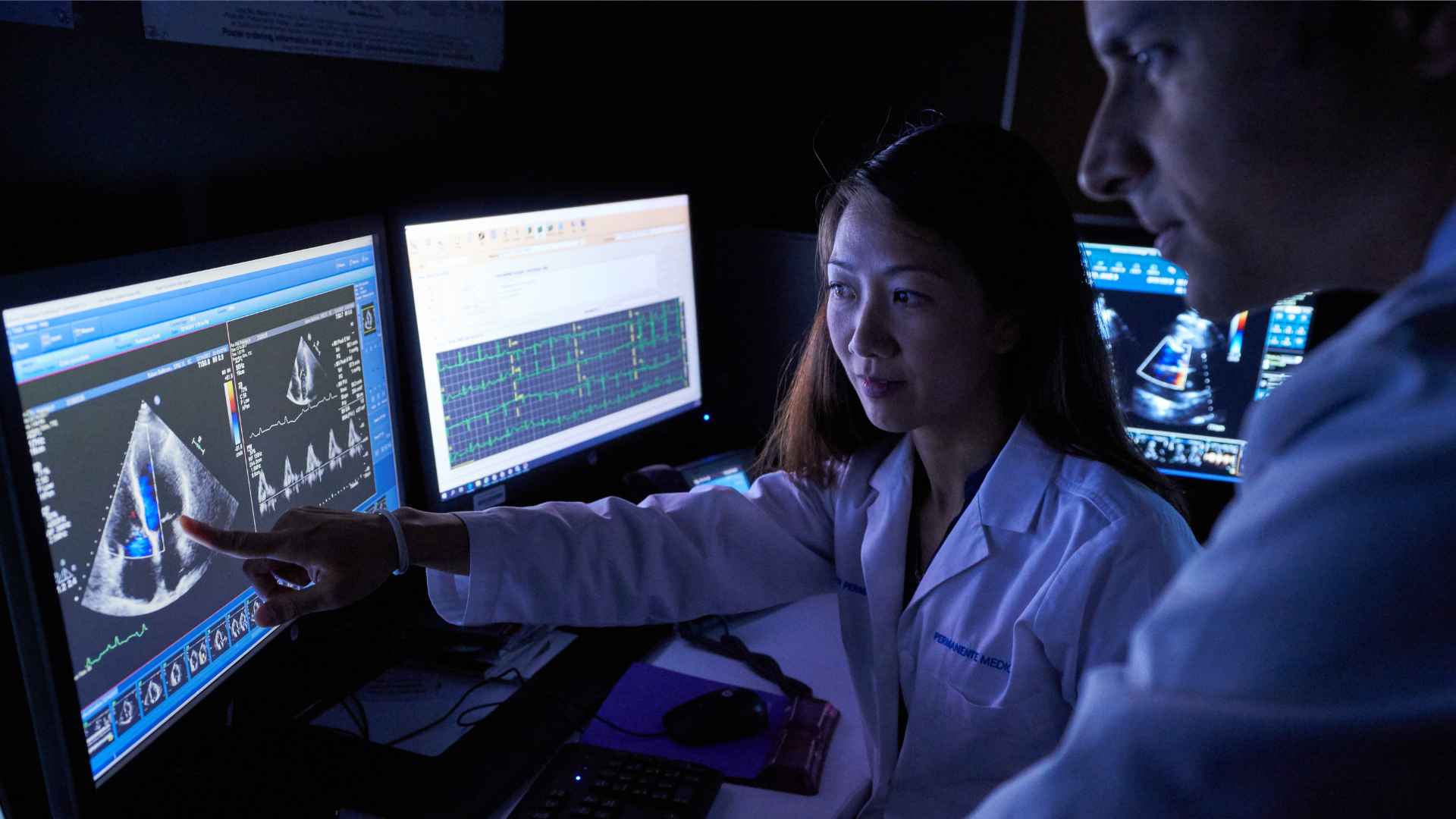
Six Permanente Medical Groups earn recognition from the AMA for initiatives in physician wellness and burnout reduction.

AI-powered patient portal enhances access, safety, and patient satisfaction


Kaiser Permanente’s 4.9 million patients in Southern California can now enjoy a more convenient health care experience thanks to a new AI-powered patient portal. The Kaiser Permanente Intelligent Navigator (KPIN) allows patients to easily book appointments and request care by simply typing their needs in their own words, eliminating the hassle of navigating preset options.
Launched by the Southern California Permanente Medical Group (SCPMG) in October 2024, and detailed in a recent study, KPIN offers patients an intuitive, personalized approach to getting care. By accessing the appointment-booking feature on their patient portal, patients benefit from a free-text “reason for visit” box where they can ask questions and get real-time answers through advanced natural language processing tools. This AI-driven feature streamlines communication, saves time, and makes getting care simpler and more accessible.
Related innovation podcast: Podcast: AI, innovation, and value-based care in medicine – Permanente Medicine
“Care is local, but at the same time it’s virtual and it’s become a global commodity,” Khang Nguyen, MD, told Becker’s Health IT. Dr. Nguyen is assistant executive medical director for Care Transformation at SCPMG and chief medical officer of care navigation for The Permanente Federation. “So, patients are really expecting artificial intelligence to support healthcare in a way that is supporting other industries, in the sense that people are able to describe what they want versus being given choices.”
The platform integrates data, such as patient age and gender, from multiple databases with the “reason for visit” information to provide tailored, safe, and appropriate clinical care options. If the patient is experiencing chest tightness, sudden weakness in an arm, or other severe symptoms, the platform’s clinical alert system can immediately connect them with a clinician for prompt assessment and appropriate care.
Related innovation story: Drs. Hoberman and Nguyen on preparing for health care AI – Permanente Medicine
The study, published in Nature by SCPMG physicians including Dr. Nguyen, evaluated nearly 3 million patient encounters and found that the platform detected urgent medical cases with 97.7% accuracy, and recommended appropriate care pathways with nearly 88.9% accuracy. Patient satisfaction scores rose about 9%.
The abandonment rate — the percentage of patients who leave the app before completing a task — was just 3%, compared to the e-commerce average of up to 70%.
“The whole point is care navigation,” Dr. Nguyen said. “So that’s where we’re going with this next is to add more specificity into different departments, different specialties, and then different use cases.”
Read more about KPIN:
Becker’s Health IT: Why Kaiser Permanente is adding AI to its patient portal in Southern California
Healthcare IT News: Kaiser Permanente AI NLP front door heightens the patient experience
TechTarget, Xtelligent Healthcare: Kaiser’s AI patient portal success hinges on quality checks
Related Posts