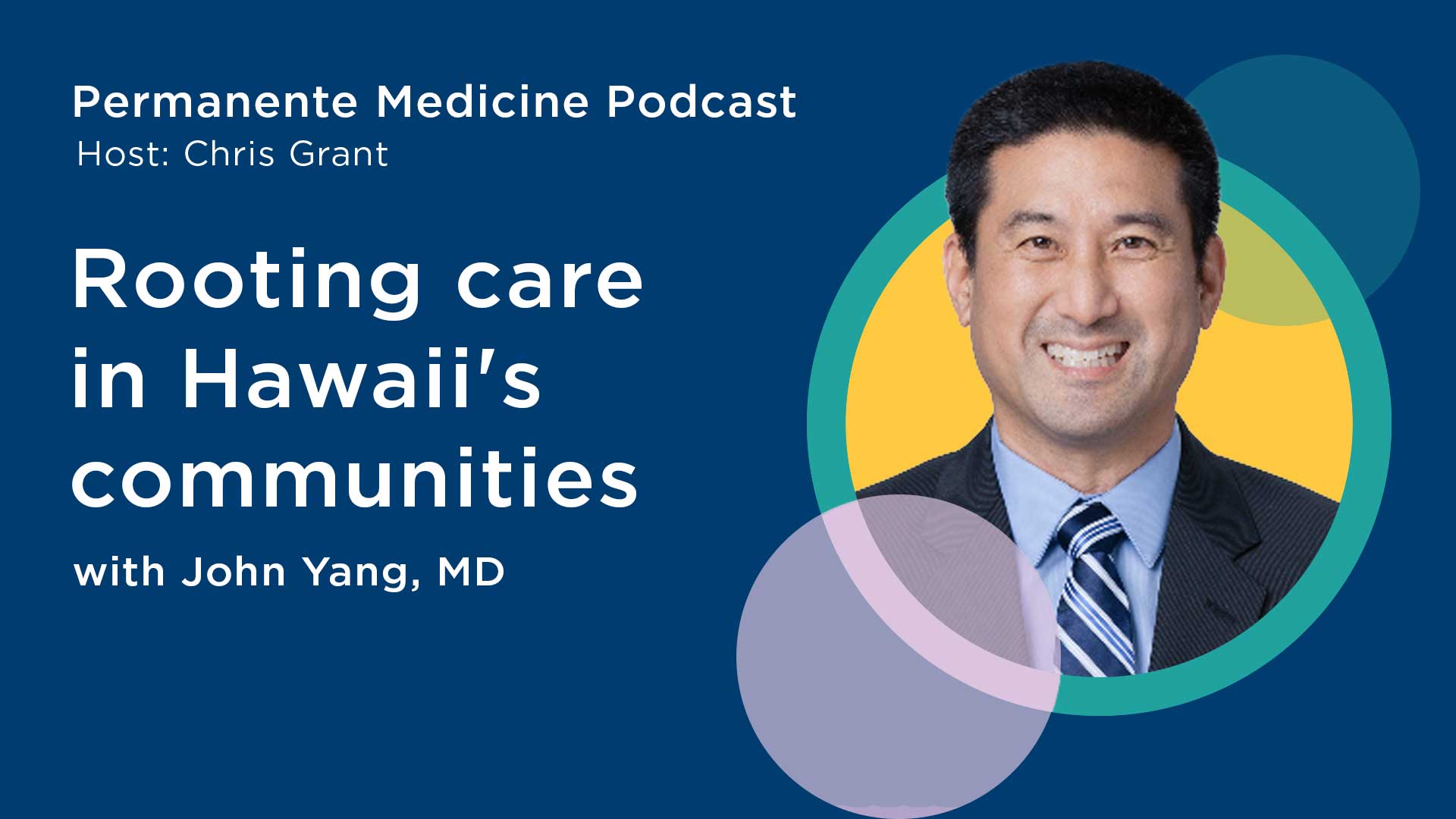
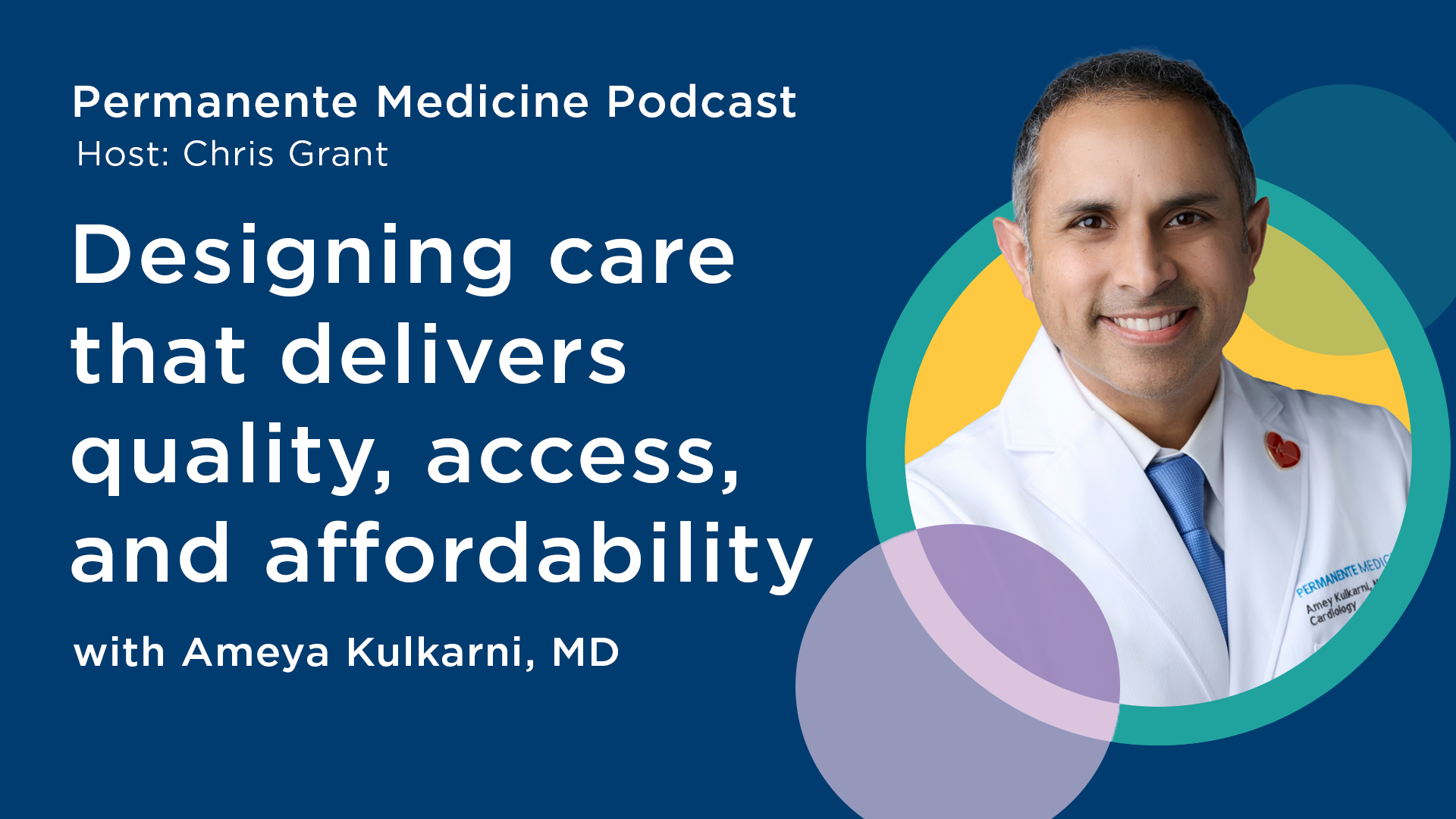
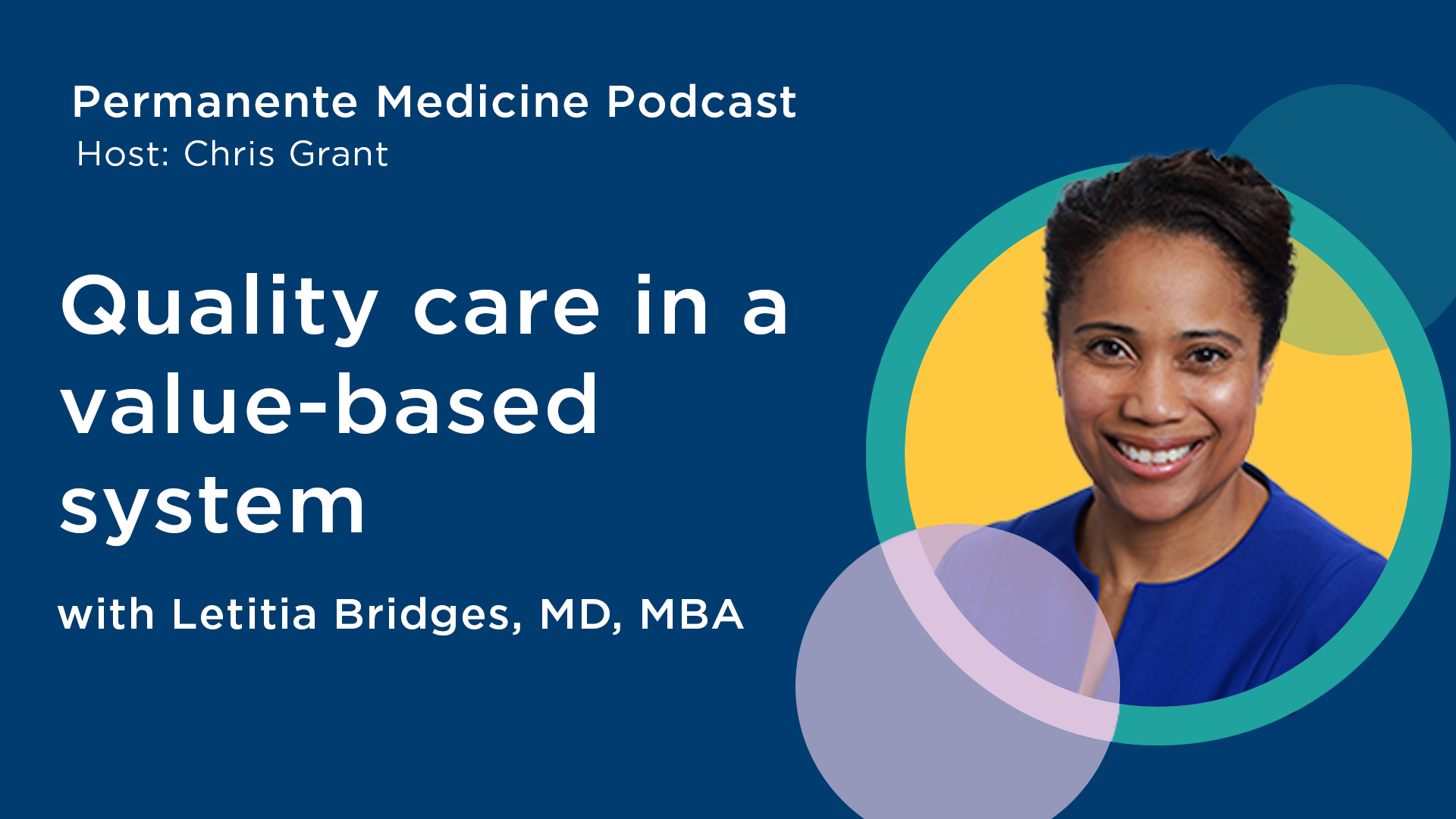
Dr. John Yang shares how deep community ties and cultural understanding shape health care delivery across Hawaii's islands — from disaster response during the Lahaina wildfires to building a homegrown physician workforce for the long term.
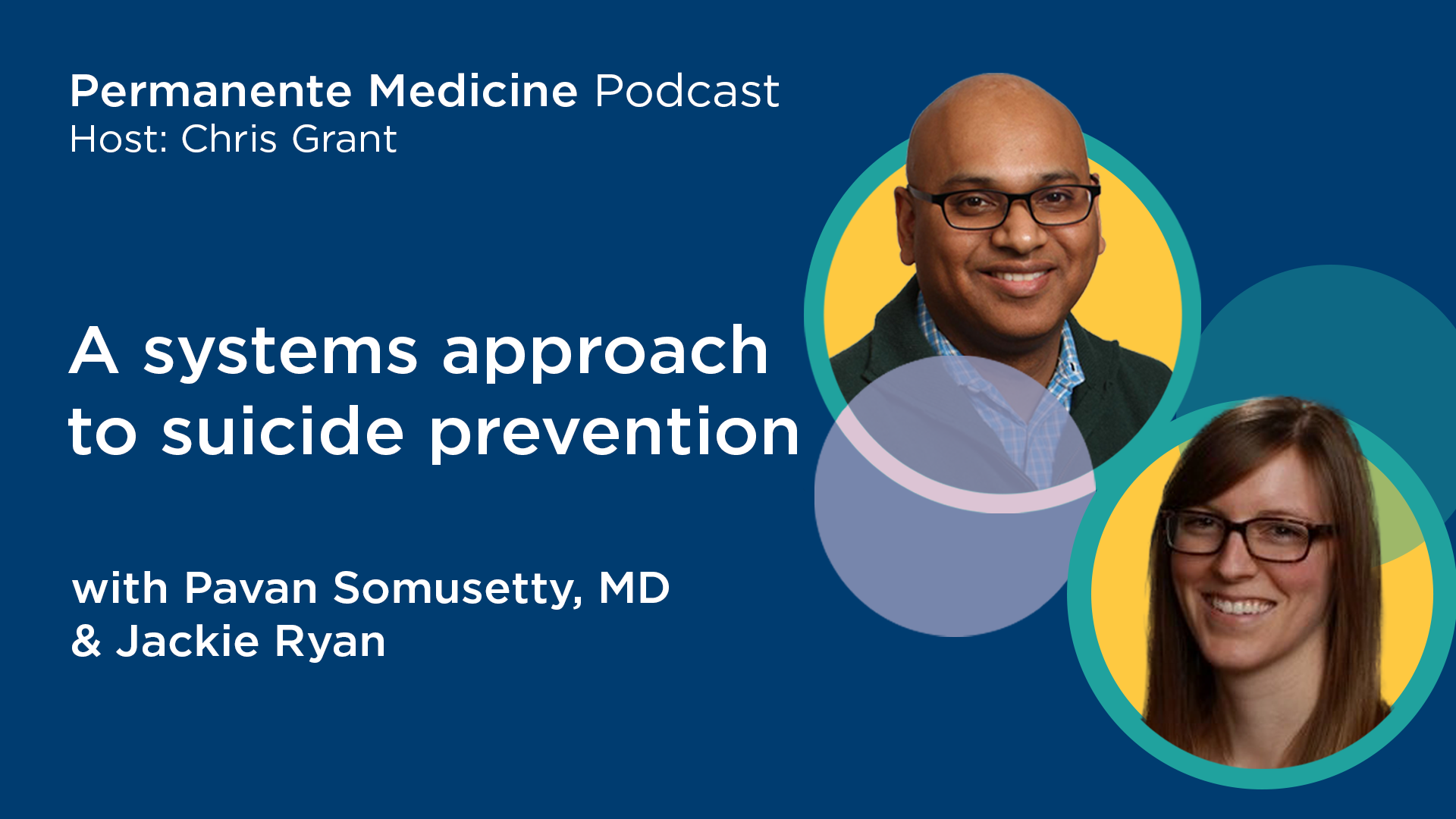
Podcast: A systems approach to suicide prevention


Pavan Somusetty, MD, and Jackie Ryan…



Suicide is a deeply personal tragedy — and a pressing public health challenge. In this episode, we take a closer look at how health systems can lead meaningful change through prevention, early intervention, and compassion.
Dr. Pavan Somusetty, regional chief of mental health at Northwest Permanente and national leader for suicide prevention at Kaiser Permanente, joins Jackie Ryan, psychiatry practice director at Northwest Permanente and Zero Suicide program manager, to discuss how to change organizational culture around identifying patients, supporting them, and talking about suicide with them. They also share how to embed suicide prevention into all levels of the health system — even in non-mental health settings — using data, proactive screenings, and a comprehensive commitment to saving lives.
Together, they explore:
- What the evidence shows about what works
- How the Zero Suicide model is reducing suicide attempts
- Practical ways clinicians can better identify and support patients at risk
- The promise of AI and data analytics to strengthen prevention efforts
- The cultural shift needed to truly destigmatize mental health
It’s a conversation grounded in both expertise and empathy — because every life matters, and every encounter is an opportunity to help.
The episode also explores practical strategies for navigating the sensitive topic of firearms with patients and families. Dr. Somusetty shared that starting the conversation can begin with the wide agreement among all kinds of people on the importance of firearm safety.
“When you realize that we all actually share those beliefs around firearms, I think that kind of takes away sometimes some of the trepidation that clinicians may have about approaching those conversations.”
“You can’t dance around that topic, but if you show that you care about them, you have that relationship,” said Dr. Somusetty. “If you’re a primary care provider or a pediatrician and you’ve worked with a family for a while, they know you. They know that you care about their family’s health and that it’s coming from a place of concern and care.”
The guests shared information on the practical tools and helpful resources available for physicians and non-physicians to help prevent suicide and begin the vital step of talking about it, like the Columbia-Suicide Severity Rating Scale.
“I have friends and family members who have come to me asking for help about how to talk to their loved ones about suicide,” said Ryan. “And that tool, the Columbia-Suicide Severity Rating tool, has made me as a non-clinician feel really well-equipped to give advice or to speak directly to my friends or family that I’ve been worried about.”
More information and resources are available from the Suicide Prevention Resource Center and the National Action Alliance for Suicide Prevention.
Connect with Chris Grant by following him on X at @cmgrant or LinkedIn.
Follow us: Subscribe to the Permanente Medicine Podcast on your favorite streaming platform.
Podcast transcript
Transcript is autogenerated. Although edited for clarity, it should not be considered an exact replication of the podcast and may also be updated as needed.
Pavan Somusetty, MD: When we first started, the conventional wisdom was that suicides were not thought to be preventable and really not the responsibility of health care organizations. It’s an outcome, but it’s not necessarily an illness or a condition. And then the research came in and showed that if you have a data oriented patient safety approach, you can actually reduce suicide deaths.
Chris Grant: Welcome to the Permanente Medicine Podcast. I’m your host, Chris Grant, the chief operating officer at Kaiser Permanente, The Permanente Federation. Today we’re talking about one of the most urgent conversations in health care suicide prevention. In the United States, nearly 50,000 people die by suicide every year. It’s one of the leading causes of death and a crisis that touches every community, family, and health care setting. Joining me for this episode are two outstanding leaders from Northwest Permanente who have been at the forefront of this work and help shape how Kaiser Permanente responds to this challenge. Dr. Pavan Somusetty is the regional chief of mental health and also serves as the national leader for suicide prevention. We’re also joined by Jackie Ryan, psychiatry practice director at Northwest Permanente and the Permanente organization’s first Zero Suicide program manager. Jackie was a driving force in launching the program and continues to lead operational and clinical improvement in this space. Pavan and Jackie, we’re so glad to have you both here to shed light on this critical work and this very important topic, and we’re all excited to learn from both of you. Before we discuss this important topic, could you start by telling us a little bit about your roles within Northwest Permanente and nationally and maybe share something about what you enjoy doing outside of health care?
PS: I’ll get started. I’m an outpatient psychiatrist and I’ve been with Northwest Permanente for the last 15 years, chief of our mental health department for five years, pretty much since the pandemic started. And prior to taking on the chief role, I stepped in as Northwest Permanente physician lead for suicide prevention about eight or nine years ago, partnering with Jackie when she was in a different role. And a few years after that I was then tapped to help identify and spread best practices for suicide prevention across all the markets. So that’s the national work and just really lucky to have strong support from the Permanente and health plan leaders in all the markets that they prioritize and continue to prioritize suicide prevention as one of the foundations of our work. Outside of this, I’ve got 3 kids, 4, 10 and 13. Lately I’ve been having a lot of fun playing the guitar with my teenager. She’s gotten pretty good in a very short period of time, so I never thought that was going to happen.
CG: That sounds fantastic. And you’ve got a busy household. I remember those days. Jackie, how about you? Let’s hear a little bit about your role and background and what you enjoy doing.
Jackie Ryan: I am the practice director for both mental health and addiction medicine in the Northwest. Prior to this, I worked with health plan in clinical quality and population health. So that was my start with Dr. Somusetty on the Zero Suicide initiative. And I guess it was about 9 years ago, but it’s been such a joy to take that work and have that and be really infused into the clinical operations that we’re doing together as a team today in our new roles. For fun, I am deep in toddlerhood with my 20 month old, but I have recently taken up sewing, so I’m really enjoying having that creative outlet for myself outside of work.
The changing conversation about suicide
CG: Let’s get started with the big picture. Suicide remains the 11th leading cause of death in the United States. Dr. Somusetty, how have you seen the conversation about suicide in health care settings evolve over the years and is it appropriate for physicians and clinicians to play a role in prevention? What might that role be?
PS: When we first started, the conventional wisdom was that suicides were not thought to be preventable and really not the responsibility of health care organizations. It’s an outcome, but it’s not necessarily an illness or a condition. And then the research came in and showed that if you have a data-oriented patient safety approach, you can actually reduce suicide deaths. And this was in some different institutions or in a smaller kind of different kind of organization. And it wasn’t shown or developed within Kaiser Permanente, but that was the first evolution of “This can be preventable.” And people started to think, if it is preventable, then who else but health care organizations who care about public health can take this on? And the other thing I would say that we’ve seen change is just this importance that our organization and many organizations have on identifying behavioral health conditions, specifically within non-mental health settings.
So our patients that have diabetes, chronic heart disease, chronic lung disease, hypertension, what we know is that they have worse outcomes and they cost our organizations more if they also have untreated depression or untreated anxiety. So we’re seeing more screening of depression, substance use, anxiety within primary care settings, within medical settings. And when you screen for those, you’re going to identify some patients who have suicidal thoughts. I usually get a call from a clinic when they find a patient that is suicidal and it’s not their expertise and “How do we deal with this?” And so we come up and identify a plan for that specific clinic that might help them.
Integrating suicide prevention into health care systems
CG: So much of health care and so much of both mental health and physical health are intertwined. And in order to solve one problem, you have to treat the whole person. Jackie, you’ve been involved in the Zero Suicide initiative at Northwest Permanente and across Kaiser Permanente from the very start. Could you walk us through what it takes operationally to roll out a suicide prevention strategy like this in a large integrated system like Kaiser Permanente? And we’ve got lots of listeners outside of Kaiser Permanente and other big health care institutions and would love for you to share your wisdom about what does it take to get this going.
JR: It takes a lot for us to shift people’s thoughts about talking about suicide freely, but Pavan and I actually went to a really fantastic IHI training early on when we started this work. And we learned that if you want to change culture within an organization, you can’t just create a little committee and say, “Okay, we’re going to change the culture and let’s go.” And how we started within the northwest was we identified three vital behaviors that we wanted to focus on to roll out this Zero Suicide initiative. So the first vital behavior was increasing the identification of patients at high risk of depression using the PHQ-9. The second was creating a reliable escalation pathway for suicide patients using the Columbia-Suicide Severity Rating Scale. And then the third vital behavior was timely safety plans and referral to treatment and creating specific workflows based on where these patients were identified within our system. So I think having identified the key behaviors really helped us over time change the culture within the northwest around how we talk to patients, identify patients, and support patients with suicidal ideation. I would just say generally this Zero Suicide model is really well-resourced and there’s a ton of free information online through the Suicide Prevention Resource Center and the National Action Alliance for Suicide Prevention.
CG: I want to pull on this thread a little bit. So for other physicians listening in multiple health care systems, medical groups, they may be part of a big hospital system or another medical organization and they’re excited to also adopt a suicide prevention framework like Zero Suicide, what would be the most important first step that they should undertake?
JR: I actually think understanding your current state is one of the best steps you can take. A Zero Suicide initiative is very multidisciplinary, and so if you can just map out a patient journey from—let’s say you’re seeing this patient in primary care or the emergency department or within the therapy setting, map out what you think happens today, I think that becomes a really illuminating exercise to then help identify what are those vital behaviors that you want to focus on within your organization or within your region.
Exploring the effectiveness of the Zero Suicide model
CG: It makes intuitive sense. Really understand the process flow today and then focus in on where you maybe see gaps or opportunities for improvement. And that’s something that quite frankly, every organization, every physician could do within their own institution. A recent JAMA study that Kaiser Permanente participated in showed that implementing the Zero Suicide model led to significant reductions of suicide attempts across health systems. Could you talk about the results and really break down for us what makes this model so effective?
PS: First of all, just the results were just so gratifying to see that it wasn’t contained to a certain environment and it was able to be reproduced across different markets with different conditions. Different areas of the country have varying suicide rates and varying access to lethal means. But I think what I can see from looking at all of the regions and all the places where this was done, each one was done differently. There weren’t any two models that were exactly alike. There were certain elements that were common. I think the PHQ-9 and the Columbia-Suicide Severity Rating Scale were essential in all of those places. But the how and when was often sometimes different in each region. And sometimes you might have some of this work being done in primary care, some of it is being done in specialty behavioral health settings, maybe more with the nurses.
But I noticed that, especially with the different KP markets, they also have different strengths. They may have population health tools or informatics tools. They may be really strong in their informatics. And so I think one of my jobs is to identify those best practices and share them with everyone else. And it’s really mapping out the patient journey. And then you figure out what’s a reliable process, what’s the checklist we’re going to do in the OR—we’re going to go through A, B, C, D, and E. That checklist might be different because the OR might look different in each market, but you do need to have a checklist and you need to go through things reliably. And so I think that’s what the approach was, trying to take a reliable approach to behavioral health care and really reduce it to a science.
CG: That’s what we do best in Kaiser Permanente. We turn things into science and process steps and data. Could you just help educate our listeners a bit on the rating scales that you referenced?
PS: Yeah. So the PHQ-9 is both a screening and monitoring tool for depression. It’s very commonly used in many health care settings, both within mental health and behavioral health settings, but also within primary care and also many other departments. So it’s a way, I call it the hemoglobin A1C of depression, which is a test that we use for diabetes, for screening for diabetes, but you can also monitor the severity of it if you repeat it over time. The PHQ-9, the ninth question on it does ask about thoughts about being better off dead or hurting yourself in some way. And when that’s positive, we recommend following up with a standardized set of questions, which is the Columbia-Suicide Severity Rating Scale. That tool is used very commonly throughout the country, not just in health care settings. There’s a scoring for that, and based on the score, you can have a different escalation of when should we go to the emergency room and should we call the crisis line.
How to approach conversations about firearms
CG: Thank you. Thanks for the explanation. I have a follow-up question for either of you. Part of the Zero Suicide approach is reducing access to lethal means like firearms. How does the program and how should physicians specifically navigate these sensitive conversations with patients and families? As I imagine there’s plenty of busy clinicians and physicians that aren’t really quite sure how to start that conversation.
PS: It might be easier for me. I have that conversation all the time with our patients, but we did research with patient partners from all across the spectrum, from all kinds of regions. And what we found across clinicians, patients, families was a really shared belief and a shared belief around safety of firearms, meaning regardless of your political perspective, everyone agrees that firearms should be used safely in a safe manner, should be stored in a safe manner, and that we don’t want people to be dying by suicide and by accidental discharge of firearms. So when you realize that we all actually share those beliefs around firearms, I think that kind of takes away sometimes some of the trepidation that clinicians may have about approaching those conversations. And I think one thing I’ve learned is asking about suicide, asking about firearms. You just have to be really explicit about it. You can’t dance around that topic, but if you show that you care about them, you have that relationship. If you’re a primary care provider or a pediatrician and you’ve worked with a family for a while, they know you. They know that you care about their family’s health and that it’s coming from a place of concern and care. And sometimes patients are like, I’m not interested in having that conversation and I will just go on to the next patient. I wouldn’t recommend trying to pressure somebody too much on that one.
Identifying at-risk patients
CG: I love that advice, and I think for all of our physician listeners, hearing you converse on it so freely and naturally perhaps makes it easier for them to work on that with their own patients. Let’s continue on that physician conversation vein. Dr. Somusetty, I have a two-part question. First, what are some practical, high-impact actions physicians can take in a routine office visit to help identify and support patients at risk of suicide?
PS: I think Jackie and I both believe very strongly in the PHQ-9, that depression tool. We think that it leads to better not just mental health outcomes, but also medical outcomes. So if you’re not already using it, you should be, especially if you’re wondering why your patient may not be taking their hypertensive medicines or they’re just not getting better, they keep coming back with asthma exacerbations. Are you screening for depression? Are you screening for anxiety? So those are things that we should all be doing. And then if that screen is positive, like I said before, don’t be afraid to ask about suicide instead of dancing around the topic. Using a validated tool really helps so that you don’t have to find your words in the moment. You can just read the words word for word on the tool. What we even found, and the evidence shows that you can give them a paper version of the Columbia-Suicide Severity Rating Scale, or you can administer it electronically and you’re going to get a similar or if not better sensitive kind of response to that.
JR: Could just add one more thing about the Columbia-Suicide Severity Rating Scale. I have friends and family members who have come to me asking for help about how to talk to their loved ones about suicide. And that tool, the Columbia-Suicide Severity Rating tool, has made me as a non-clinician feel really well-equipped to give advice or to speak directly to my friends or family that I’ve been worried about. So I just can’t say enough about the high regard I hold for that tool, especially as someone who isn’t a clinician. It’s an awesome resource.
CG: I love that advice, Jackie. There are tools that exist that can be administered by the most trained or the least trained individual with great success. As you’ve nicely pointed out, we all play an important role in preventing suicide, and the first step is just to talk about it and then ensure that people have the most practical tools in their hand. I think we’ve talked quite a bit about this, but I wanted to create the opportunity for a little more space on advice you would give to physicians who still might feel uncertain or uncomfortable about asking patients direct questions about suicide, other tips or tools that you would like to bring to light?
PS: I think one thing that Jackie and I learned early on is that this is really the Zero Suicide model is for systems. It’s not necessarily for individuals or people, and if they don’t have time to ask the question, then we work with their team to figure out why and what do they have time for and when are these questions coming up? So I think we can give them the tools and the skills and the education, but you also have to have the curiosity of why is this a challenge. Within this team, we’ve implemented that Columbia-Suicide Severity Rating Scale at our call centers in the northwest. Many of our MAs ask these questions, even like security, OB-GYN, pain clinic, and it goes on and on. But with each team, it really varies based on how patients are presenting to them and having the support really of their leaders that it’s okay when somebody says that they’re suicidal. If you need to drop other things, you can drop other things. And I think getting that buy-in from their leaders or their managers and providing a workflow, a diagram—we’ve made dozens of these for different departments. When you have that diagram, then you have that permission. Part of it is rehearsing these questions, but part of it is really strengthening the system and making sure everyone knows what to do when something like this happens.
CG: It’s great advice and having it all mapped out in advance makes that decision in the moment intuitive, not complex at all. Bringing the conversation back to outcomes, the JAMA study found that as many as 165 to 170 suicide attempts were prevented annually thanks to the Zero Suicide efforts, and you could only imagine if the Zero Suicide program was implemented everywhere, those numbers would be multiplied by 10,000. What does that number signify to you personally and professionally?
PS: Wow. A lot of times in this field in psychiatry and mental health, you don’t get a lot of wins, really. The stigma goes down and more people want mental health, which is great, but it’s hard to provide care for everyone, and it often feels like you’re kind of in this sort of unwinnable battle, and you just have to pause and look at what we’ve accomplished and putting Permanente Medicine to this epidemic in this country and to see those results was just really gratifying that we can actually do this. Just a lot of other conditions that we’ve been able to change the trajectory that we can do it for this.
CG: Love it. I love it. Jackie, how about you? What do the numbers signify for you personally and professionally?
JR: Yeah. I would say that this body of work has been the highlight of my career by far. The amount of time and effort that went into the systems work and then having that translate into actual saved lives is incredible. And I would just echo Pavan’s sentiment that this was everyone from MAs in primary care to leaders within the mental health department to our national partners. This was a system-wide effort, and I couldn’t be more proud of all of my colleagues that really stood this up and did the change management, did the work, and let go of some of their personal feelings to speak more frankly about suicide with our patients. I think it’s a beautiful thing.
The future of AI and data in suicide prevention
CG: I do too. And this has been a great conversation, and I could go on for hours and talk to you both about it because you have shed such a positive, hopeful light on a complex topic, and I thank you for that. As you look ahead, what innovations, clinical, cultural, or technological, do you think will make the biggest difference in suicide prevention?
PS: Well, one of the things that we’re already doing in the northwest, and I know some of the other markets have started to do this as well, is using all this data that we have within Epic. These data points can actually help us to predict who is at risk and who is at high risk. And so we’ve been using predictive modeling tools to really make it easier for our clinicians to identify quickly which patients they need to spend more time with that might be suicidal. And so I think you hear a lot about AI and you hear about machine learning. I think that really is going to be the forefront. You still always need the human connection, I think, I hope. People, frankly, they feel suicidal when they’re disconnected and they feel lonely. And we still need humans, whether they’re clinicians or family or the community to wrap around these folks that are vulnerable. But if we can make the clinicians that are treating them, make their jobs easier, by letting them know very quickly who they need to spend more time with, that just makes it all the more easier to save lives.
CG: Jackie, how about you? When you think about clinical, cultural, technological, where do you see as the biggest difference makers in suicide prevention?
JR: Yeah, would just want to highlight that I feel so proud of our mental health department. I feel like this is coded into our DNA at this point, and all of our clinicians are really fantastic at bringing this to the forefront of their conversations with patients and supporting their needs. I think in line with that, there is a cultural shift happening in our broader society around mental health. We see it just in how people are asking for services. And while, as Pavan mentioned, sometimes that can be stressful because of supply and demand, I really think that the new awareness around mental health challenges for folks actually will help in stigma reduction, and it gives me a lot of hope for our society at large in this space.
CG: I agree. And I think while it can be overwhelming at times to have so much demand for mental health support, it can also be a good problem to have because it means that we’re successful in de-stigmatizing, we’re successful in educating communities, families, individuals, that it’s okay and it’s a good thing to reach out for help. Pavan, I wanted just to hit on one point that you raised about big data analytics and AI. And I personally do believe that the technological advances over the next 10 years are going to supersede the past 50 years as far as innovation and care transformation. But the most exciting outcome from that is that it frees up clinicians to spend more time, shoulder to shoulder, face-to-face with patients in order to be that mentor, that encouragement, and also to look in their eyes and to see when they may be feeling anxious or afraid.
So there’s this old saying that not all heroes wear capes. And in talking with both of you today, that’s exactly how I feel Pavan and Jackie. What you’re leading in Kaiser Permanente and beyond Kaiser Permanente—because so many look to our organization as a role model—is transforming how suicide prevention, knowledge, information, and care is disseminated. I want to thank you both for this important work, and I love the fact that we had a very open, candid conversation that felt extremely comfortable on a complex topic like suicide. How great is that? And that’s what needs to increasingly happen in society. Thank you both for touching so many lives and remaining focused on this important area, and I want to thank you both, and I also want to thank our listeners for joining us. If you’re new to the Permanente Medicine Podcast and found today’s conversation valuable, we’d love for you to subscribe, leave a review, or share an episode with a colleague, and this is a great one to share. Until next time, take care.
The opinions expressed on this podcast are those of the speakers and are not necessarily the views of Kaiser Permanente, the Permanente Medical Groups, or The Permanente Federation.
Related Posts